
 SEARCH
 LIST YOUR PROPERTY
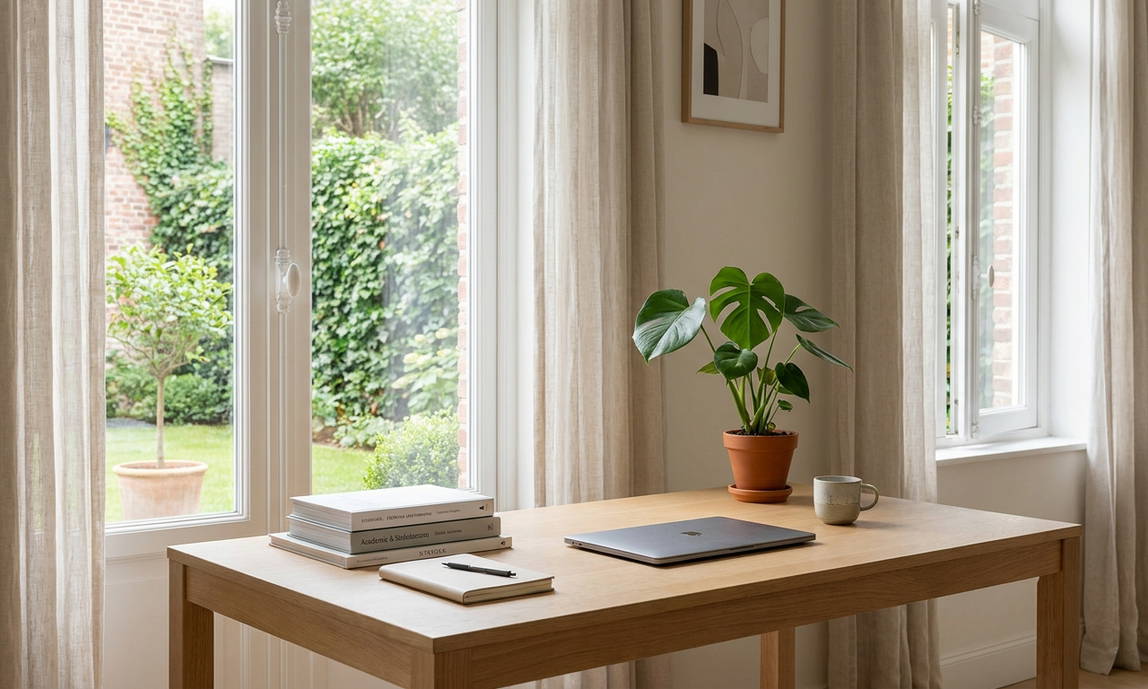
The 2026 academic year is once again shaping up to be a source of anxiety for thousands of Belgian and international students. Finding student housing in Brussels, Liège, or Louvain-la-Neuve has become a real ordeal. Faced with constantly growing demand and a completely saturated supply of traditional student housing (kots), young people and their parents often find themselves helpless. At Roomlala, we are convinced that there are human, affordable, and secure solutions to overcome this unprecedented crisis.
Indeed, the shortage of student housing in Belgium in 2026 is no longer a fleeting phenomenon, but a structural reality highlighted by many real estate experts. Queues are getting longer, prices are soaring, and the stress of the start of the school year sometimes overshadows the joy of beginning higher education. It is in this tense context that renting a room in a host's home emerges as a particularly relevant alternative for student accommodation in Belgium.
Read also: Ontario rent increase 2026: Why renting out a room appeals to hosts, Rent control in 2026: What are the new rules for shared housing? and New subletting rules in Switzerland: How to legally rent out a room in 2026
Far from being a default choice, living with a private individual offers a multitude of advantages for both the tenant and the host. In this comprehensive article, we suggest analyzing the current state of the student housing market, deciphering the benefits of this solidarity-based solution, and guiding you step-by-step through the legal and practical aspects to ensure your cohabitation goes smoothly.
The shortage of student housing in Belgium in 2026: An alarming observation
University cities under extreme tension
The situation in major Belgian university hubs has never been so critical. Whether looking for student housing in Brussels, Liège, or Louvain-la-Neuve, students are facing a dried-up rental market. University residences are fully booked months before classes begin, and real estate agencies are overwhelmed with applications. This imbalance between supply and demand significantly extends search times, sometimes forcing some students to give up their first choice of university for lack of a roof over their heads.
At Roomlala, we receive daily testimonials from young people who, just weeks before the start of the academic year, still have not found a backup plan. Take the example of Sarah, a French student who came to do her master's degree at the ULB. After more than three months of unsuccessful searches and dozens of visits canceled at the last minute, she hit a wall. Her case is far from isolated and perfectly illustrates the brutality of the current market for newcomers.
This geographical saturation can be explained by several factors: the constant increase in the number of students (especially international ones), the slow pace of new construction projects, and the conversion of many former student rooms into standard housing or short-term tourist rentals. Faced with this reality, it is urgent to rethink the way we house our youth.
The explosion of rents and the Kotkompas report
Beyond scarcity, financial accessibility poses a major problem. The traditional student housing market is undergoing a significant upscale shift. Real estate developers are prioritizing the construction of luxury residences, equipped with gyms and coworking spaces, to the detriment of affordable housing. The direct consequence: rents are exploding. It is no longer rare to see new or renovated rooms exceeding 700 to 800 euros per month in Brussels, an astronomical sum for the majority of families.
The figures are clear. According to the recent Kotkompas report, published jointly by Diggit StudentLife and Stadim, the deficit is staggering. No less than 70,000 additional student rooms would need to be built to hope to reach a balance in the Belgian market within a few years. This shocking figure highlights the inability of the traditional real estate stock to absorb current and future demand.
This housing insecurity directly impacts academic success. A student who has to work multiple jobs to pay their 800-euro rent will logically have less time to devote to their studies. This is why, faced with this shortage of student housing in Belgium in 2026, it is essential to activate new levers, such as optimizing existing space in private homes.
Student homestay: A supportive and reassuring alternative
Controlled rent and an environment conducive to success
Faced with the rampant inflation of the traditional market, the student homestay stands as a true anti-crisis shield. By renting out a room available in their house or apartment, the host generally offers a much lower rate than the student housing market. This controlled rent, often including all utilities (water, electricity, internet), allows the student to budget for their year without unpleasant surprises or abusive adjustments at the end of the lease.
Let's imagine Thomas, a first-year student in Liège. By opting for a homestay via Roomlala, he only pays 400 euros per month, utilities included, compared to the 650 euros requested for a basic studio in the same neighborhood. This monthly saving of 250 euros allows him to focus fully on his exams without the stress of difficult end-of-month periods.
Furthermore, this type of housing offers an exceptional quality of life. The student benefits from the comfort of a real home (equipped kitchen, washing machine, sometimes a garden) and a quiet environment, ideal for studying. Far from the hustle and noise sometimes associated with large student buildings, homestays guarantee a lifestyle conducive to academic success.
Additional income and a caring presence for the host
If the student finds value in it, the host is just as much of a winner. For many people, whether they are retirees, single-parent families, or couples whose children have left the nest, having an empty room represents a loss of earnings and sometimes a feeling of emptiness. Renting out this space generates a significant additional income, which is particularly welcome in a context of high cost of living.
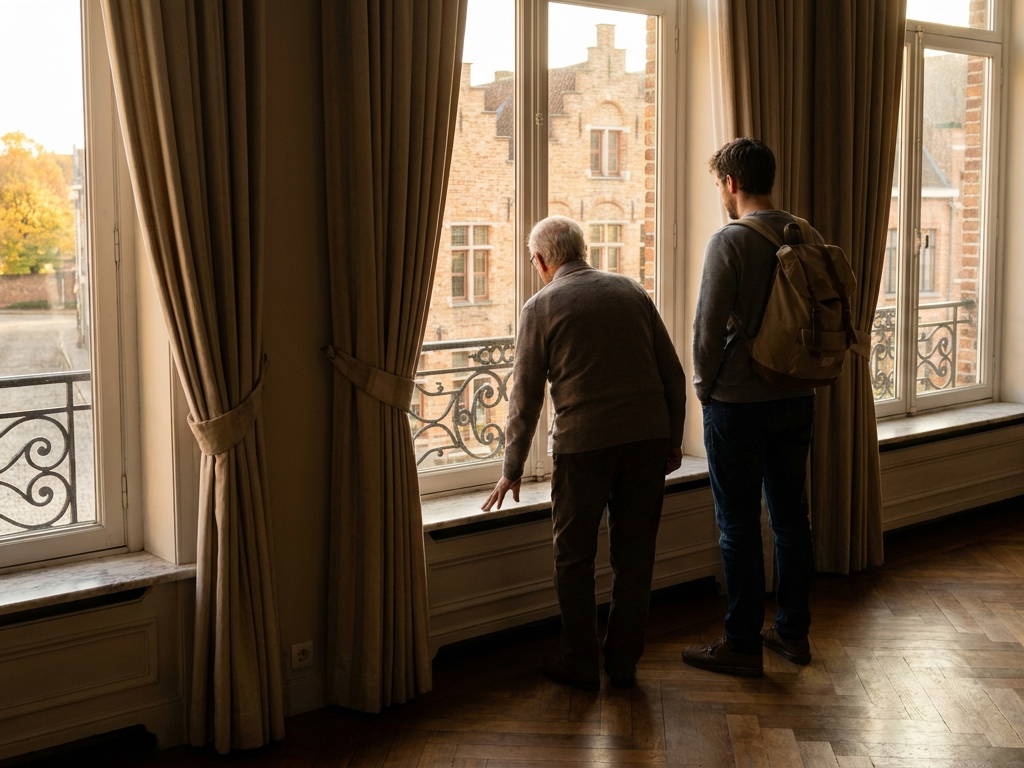
But beyond the financial aspect, it is the human experience that prevails. Welcoming a young person into your home means breaking isolation, recreating intergenerational ties, and bringing some life into the house. At Roomlala, we observe that many hosts are driven by a strong sense of solidarity. They know they are providing an invaluable service to a young person in distress due to the housing crisis.
Let's take the case of Martine, a young retiree living near Louvain-la-Neuve. By renting out the room of her son who moved abroad, she ensures an income of 350 euros per month that helps her pay her energy bills. In return, she sometimes shares a meal with her tenant, chats about current events, and feels reassured by this caring presence under her roof. It is a truly win-win relationship.
Legal framework in Belgium: What you need to know before getting started
The student lease: strict regional rules to follow
It is crucial to understand that student rentals in Belgium are a regional competence. The rules governing student leases therefore differ depending on whether your property is located in Brussels, Wallonia, or Flanders. At Roomlala, we make it a point of honor to inform our users about these specifics to guarantee 100% secure rentals.
In the Brussels-Capital Region, for example, the student lease has a maximum duration of one year, which can be renewed. A very important provision concerns early termination: the student can end the lease at any time with two months' notice, without indemnity if the termination occurs before March 15th. In Wallonia, the legislation also offers a specific framework for student leases, limiting the duration to a maximum of one year and strictly regulating the reasons for termination (dropping out of studies, death of a parent, etc.) with one or two months' notice depending on the case.
As a host, it is essential to draft a clear lease agreement that explicitly refers to the regional legislation applicable to student housing. The student will generally need to provide proof of their enrollment in an educational institution for this type of specific lease to be applied. Using a platform like Roomlala helps you structure this process in a reassuring way.
Urban planning in Wallonia: the flexibility of single rooms
One of the major points of vigilance when talking about creating a student room concerns urban planning rules. Many homeowners are afraid to take the plunge, fearing heavy and expensive administrative procedures. Fortunately, the law makes a very clear distinction between dividing a house into several dwellings and renting a simple room in a host's home.
In Wallonia, the Code of Territorial Development (CoDT), specifically through its article D.IV.4, brings excellent news for solidarity-minded hosts. The creation of a single room as a student dwelling in a host's home is greatly facilitated on a legal level: it is not subject to an urban planning permit. This means you can start renting almost immediately, without waiting for the approval of the municipality.
However, to benefit from this permit exemption, strict conditions must be met:
- The owner must reside in the dwelling as their primary residence.
- The student tenant must use the common facilities of the house (kitchen, bathroom, main entrance).
- It must be only a single room rented to a student (the creation of several student rooms would require an urban planning and rental permit).
How to ensure a successful intergenerational or solidarity-based cohabitation?
The key to success: transparent communication from the start
For the rental of a room in a host's home to take place under the best conditions, preparation is essential. At Roomlala, we always advise taking the time to get to know each other well before signing. During the visit or the prior video call, do not hesitate to ask questions about each other's lifestyle. A medical student who studies late at night will have different needs than an art student who creates bulky models.
It is fundamental to establish clear and written common rules for living. These rules, which can be annexed to the lease agreement, must address daily life subjects:
- Schedules for using common spaces (kitchen, bathroom, washing machine).
- The policy regarding outside visitors (friends, partner).
- The distribution of household chores if the student participates in the maintenance of shared spaces.
- The rules of discretion and respect for everyone's sleep.
Do not forget that kindness must be at the heart of your approach. The student arriving at your place may be leaving the family cocoon for the first time. A small welcome note, a tour of the neighborhood, or a shared meal on the first evening can make all the difference and establish an immediate climate of trust.
Finally, use a trusted platform. By using Roomlala, owners and tenants benefit from a secure framework, verified profiles, and an internal messaging system that allows you to communicate in complete confidentiality before making a commitment. Faced with the urgency of the 2026 academic year, choosing a homestay means opting for a student housing solution in Belgium that makes sense, combining financial security, compliance with the law, and true human solidarity.

There are no comments yet.
Add a comment
You must be logged in to post a comment.