
 SEARCH
 LIST YOUR PROPERTY
The academic start of late 2026 marks a critical turning point for thousands of young people in Belgium. Finding an affordable roof over one's head in the European capital now feels like a real obstacle course. At Roomlala, we see the consequences of this unprecedented crisis every day. The Brussels student housing shortage 2026 is making headlines, pushing students and their families to seek viable alternatives. In this tense context, renting a homestay is emerging not only as an economic lifeline but also as a wonderful opportunity to build social bonds. Let's dive together into the heart of this crisis and discover why this supportive solution might just save your academic year.
Understanding the scale of the student housing shortage in Brussels in 2026
Alarming figures for student housing in Belgium
The student housing in Belgium situation has never been more concerning than at the end of 2026. Recent statistics are clear: the country is facing a critical deficit of nearly 70,000 student beds. This supply crisis is saturating the national market, but the tension is most palpable in Brussels. University infrastructures such as the ULB, the VUB, or the UCLouvain Saint-Louis attract more national and international students every year, while the construction of new residential campuses struggles to keep up with the frantic pace of demand.
Read also: Subletting in Switzerland in 2026: Rules, Rights, and Best Practices, Strict regulations for tourist rentals in Quebec (Fall 2026): Why hosts are focusing on long-term stays and Mobility lease 2026: The strategic refuge for hosts in the face of new laws
This imbalance between supply and demand turns the search for a simple room into a real competition. Waiting lists for university residences stretch for several years, and private listings disappear just minutes after they are published. At Roomlala, we receive hundreds of testimonies from students forced to stay in youth hostels or make exhausting train commutes from other provinces because they could not find a place to stay in the capital.
Let's take the concrete example of Lucas, a Master's student at the ULB. Originally from Namur, he started his search in April 2026. Despite a solid application and reliable guarantors, he faced more than twenty rejections before turning to alternative solutions. His case is far from isolated and perfectly illustrates the brutal reality of the current Brussels real estate market, where student status is sometimes perceived as a risk by traditional landlords.
The financial impact on families and young people
Beyond the scarcity of properties, it is the explosion of prices that is hitting households hard. In 2026, the median rent for a student room in Brussels has crossed a new symbolic threshold to settle at around €550 per month, including charges. This amount, which has been constantly increasing for several years, undoubtedly makes the capital the most expensive university city in the Kingdom, far ahead of Liège, Namur, or even Ghent.
This rampant inflation weighs heavily on family budgets, which often have to cut back on other expenses to ensure their children's academic future. For scholarship students or those who fund themselves through student jobs, the situation is even more precarious. Many find themselves forced to work extra hours to the detriment of their studies, thus increasing the risk of dropping out. Student poverty is no longer a myth; it is a daily reality.
Faced with these prohibitive rents, classic shared housing in Brussels remains an option, but it often requires financial guarantees that not everyone can provide, not to mention the difficulty of finding an already formed group or a landlord accepting joint leases. This is where a more flexible, less expensive, and deeply human alternative makes perfect sense to rebalance the budget for young people.
Homestay: The supportive and economic alternative
A controlled rent in the face of inflation
Faced with the Brussels student housing shortage 2026, student homestay stands as an effective bulwark against soaring prices. The principle is simple: a host (or primary tenant) with a spare room in their home decides to rent it to a student for the academic year. This formula makes it possible to offer rents significantly lower than standard market prices, often 20 to 30% cheaper than an individual room.
The financial advantage is twofold. For the student, it is the assurance of an affordable rent, generally including all charges (water, electricity, internet, heating). No more bad surprises when the end-of-year adjustments arrive! For the host, it is an opportunity to generate a significant additional income, which is particularly welcome in times of inflation to offset the cost of living or the maintenance of their property.
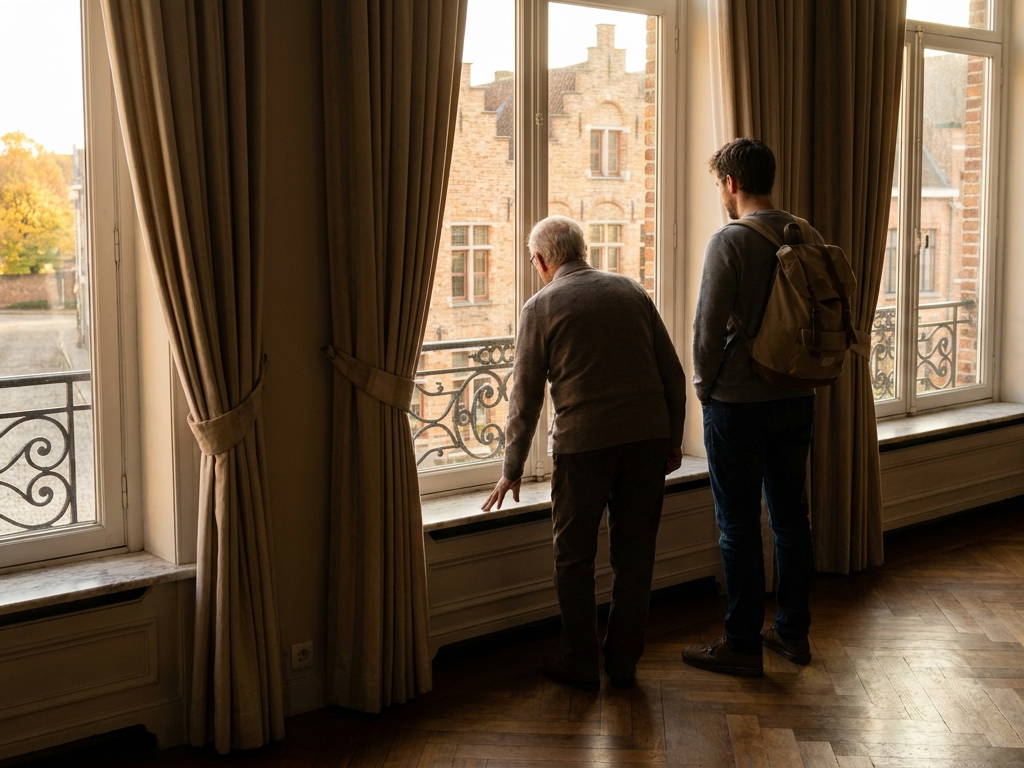
Imagine the case of Marie, a 65-year-old retiree living in a large house in Schaerbeek. Since her children left, two rooms have been unoccupied. By signing up on Roomlala, she was able to rent one of them to a medical student for €400 per month. Not only does this income help her pay her energy bills, but in return, she offers spacious, quiet, and perfectly equipped accommodation to a young person who could never have afforded such comfort on the traditional market.
An enriching human experience
Renting a homestay is not just a financial transaction. It is above all a human adventure, based on mutual respect, solidarity, and exchange. For many young people leaving the family nest for the first time, arriving in a large city like Brussels can be unsettling. Living with a local offers a reassuring environment, a benchmark in an unknown setting.
Hosts, for their part, appreciate the presence and vitality that a young person brings to the house. Whether it's sharing a meal from time to time, chatting about the news, or simply smiling at each other in the kitchen, these small interactions break the loneliness that affects many city dwellers. It is a form of intergenerational shared housing that proves that housing can be a vector for social cohesion.
At Roomlala, we strongly encourage our users to define their expectations from the start. Are you more independent and just looking for a quiet place to study? Or do you prefer to share friendly moments with your host? The flexibility of this formula allows you to find the profile that exactly matches your lifestyle, far from the sometimes heavy anonymity of large university residences.
Hosts: How to rent a room legally in Belgium?
The configuration of the premises and domicile
Do you have a spare room and want to participate in the collective effort against the student housing in Belgium crisis? That's an excellent initiative! However, it is crucial to respect Brussels regulations. The first point of vigilance concerns the configuration of the premises. For the rental to be considered a homestay and not an independent dwelling, the student must share certain living areas (kitchen, bathroom) with you.
Above all, access to the rented room must under no circumstances be through a completely separate exterior door. If that is the case, the Brussels urban planning authorities will reclassify the space as an independent dwelling, which requires a specific urban planning permit, often complex and expensive to obtain. Keep the spirit of sharing inherent to this formula to stay within the law.
Then, there is the question of domicile. In the context of a standard Belgian student lease, the rule is clear: the student cannot establish their primary residence in the rented room. Their official domicile must remain at their parents' address. This protects you as a host, particularly against potential seizures by bailiffs in case of debts incurred by the tenant, and confirms the temporary and study-related nature of the rental.
The student lease: registration and EPB rules
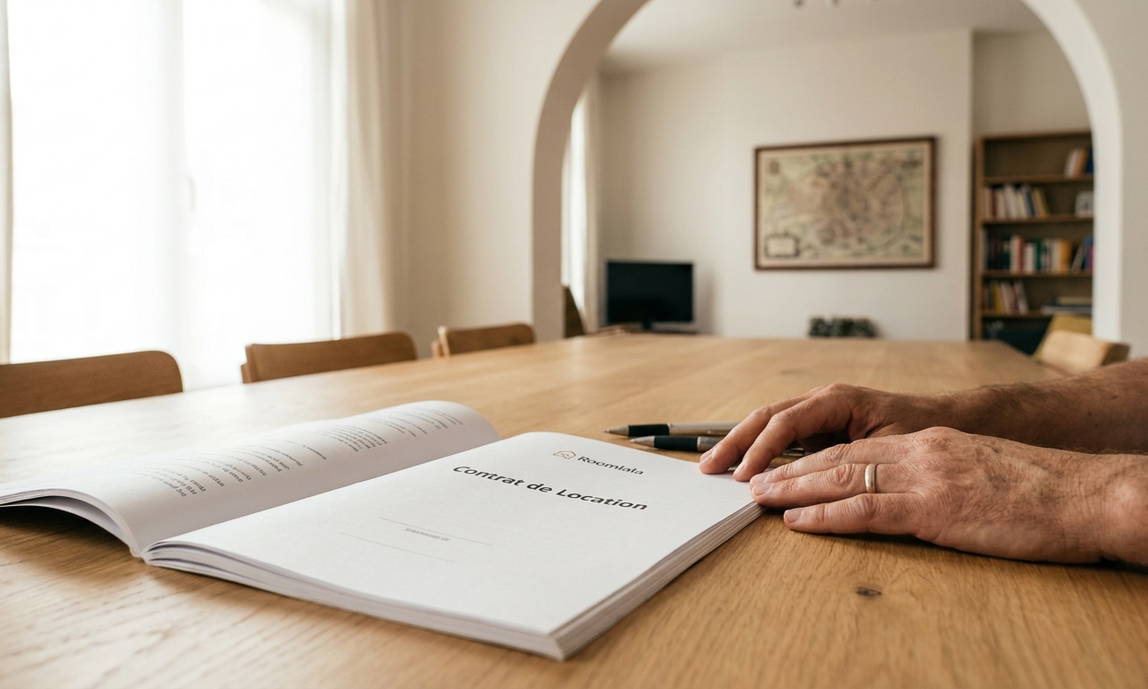
Drawing up a written student lease is a legal obligation. This document must specify the duration (usually 10 or 12 months), the amount of the rent, the distribution of charges, and the rules of community living. But be careful, signing the lease is not enough: you are required to register it with the SPF Finance. Good news: this procedure is completely free and can be done easily online via the MyRent platform within two months of signing.
Why is this registration so important? In addition to putting you in compliance with the law, it is the essential condition for protecting your rights and, above all, for retaining the right to index the rent annually. If the lease is not registered, the student could, under certain conditions, terminate the contract without notice or compensation.
Finally, let's talk about energy. In 2026, Brussels legislation is strict regarding the Energy Performance of Buildings (EPB) certificate. As a host, you must be in compliance with this certificate. If your home is an energy sieve (classes F or G), the law prohibits you from applying the annual rent indexation. This is a crucial point to check before setting your price:
- Have an EPB audit carried out by a professional accredited in the Brussels-Capital Region.
- Mention the energy class in your listing on Roomlala.
- If necessary, consider small insulation works to improve your score and enhance your property.
Students and tenants: How to make your homestay stay a success?
Choosing the right neighborhood and host
Brussels is a mosaic of 19 municipalities, each with its own atmosphere and advantages. Faced with the Brussels student housing shortage 2026, do not limit yourself to Ixelles or Etterbeek, which are traditionally popular but completely saturated. Expand your search! Municipalities like Jette (ideal for medical students at UZ Brussel), Woluwe-Saint-Lambert (near UCLouvain), or even Schaerbeek and Forest offer excellent opportunities for homestays.
The important thing is to check accessibility by public transport. The STIB network is very dense: a home located 30 minutes by tram from your campus can turn out to be much quieter, more spacious, and more economical than a tiny room located right in front of the university. Take the time to calculate your daily routes before making your choice.
The choice of the host is just as crucial. Take the time to chat via the Roomlala messaging system before booking. Ask concrete questions about the pace of life: does the host get up early? Do they allow you to invite a friend over to study? How is the use of the kitchen and bathroom organized? A good match on lifestyle is the secret to a successful and serene cohabitation.
The advantages of using a secure platform like Roomlala
In a context of high demand, housing scams are multiplying on social networks and non-moderated classified ad sites. Fake hosts, requests for deposits via cash transfers, stolen photos... The traps are numerous. That is why using a trusted platform is essential to secure your search for a student homestay.
At Roomlala, we make it a point of honor to verify the identity of our members. Our secure payment system guarantees that your money is only transferred to the host 48 hours after your arrival on the premises, thus protecting you against any bad surprises. If the room does not match the listing, we block the payment and help you find a rehousing solution.
Furthermore, we provide a reassuring framework with contract templates, legal advice adapted to Belgian legislation, and a responsive customer service. Whether you are a student anxious about not finding a roof or a host wishing to rent your room with complete peace of mind, Roomlala is your trusted partner to transform this housing crisis into a beautiful human and financial opportunity.

There are no comments yet.
Add a comment
You must be logged in to post a comment.