
 SEARCH
 LIST YOUR PROPERTY
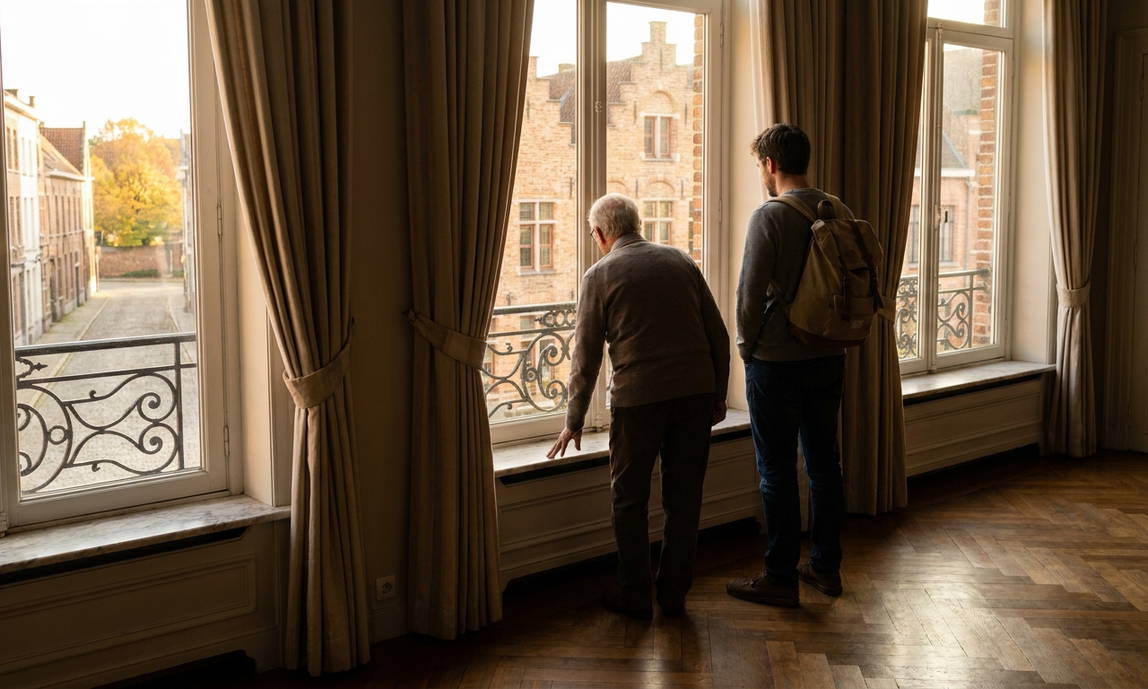
Finding a student room in Brussels in 2026 is becoming increasingly like a real obstacle course. Faced with skyrocketing demand and supply that is struggling to keep up, thousands of young people find themselves in uncertainty as the academic year approaches. At Roomlala, we are closely monitoring these developments in the Belgian real estate market. Fortunately, one solution that is economical, community-focused, and welcoming stands out clearly this year: homestay rentals. Here is an analysis of a trend that is reshaping the landscape of student housing in the European capital.
The market reality: Finding a student room in Brussels in 2026 is a challenge
The student housing situation in Belgium has reached a critical point. According to the latest verified data, the country is suffering from an alarming structural shortage, estimated at nearly 70,000 missing student units for 2026. This supply crisis is hitting major university hubs head-on, and Brussels is unfortunately at the forefront of cities hardest hit by this historical deficit.
Read also: Student housing in Flanders: What you need to know about student leases for the 2026 academic year, Fall 2026 in Italy: The advantages of the Canone Concordato for renting out your room and Regulation of short-term rentals: What changes for students in Spain for the 2026 academic year
In municipalities highly popular with university students, such as Ixelles, Etterbeek, or Auderghem, the housing tension is palpable. Listings for traditional student rooms vanish in a matter of hours, leaving many young people and their parents in growing distress as the start of the university year in Belgium approaches. This scarcity inevitably has a direct impact on prices, which have seen constant inflation over recent years, making access to housing increasingly elitist.
Today, the average rent for a student room in Brussels in 2026 fluctuates between 600 and 650 euros per month, utilities included. This amount represents a massive portion of a student's budget, if not an insurmountable barrier for families with modest incomes. Faced with this price surge, seeking more viable financial alternatives is no longer just a choice, but an absolute necessity to ensure equal opportunities for access to higher education.
It is in this context of student housing shortages that behaviors are shifting. Young people are moving away from traditional real estate agencies to turn to collaborative solutions. At Roomlala, we are seeing a spectacular increase in searches for shared housing or accommodations with private individuals, proving that the current crisis is forcing the market to reinvent itself toward greater solidarity.
Student homestay: The economical and human alternative
Substantial savings in the face of inflation
Student homestay is now establishing itself as the most pragmatic response to the surge in Brussels rents. By renting a room available within a primary residence, students can expect to reduce their housing budget by 20% to 30% compared to a traditional individual student room. Furthermore, utilities (water, electricity, internet) are generally included in the rent, thus avoiding unpleasant surprises at the end of the month related to the energy crisis.
Let's take a concrete example: Julien, a master's student at ULB, was desperately looking for accommodation for less than 650 euros. By using Roomlala, he found a furnished room with a retired couple in Woluwe-Saint-Pierre for 450 euros per month, all utilities included. This monthly saving of 200 euros allows him to fund his transport passes and grocery shopping without having to work two student jobs.
For hosts, it is also a financial boon. Renting out an unoccupied room generates significant additional income, which is particularly welcome for coping with the rising cost of living or for funding energy renovation work in their home.
The richness of intergenerational cohabitation
Beyond the purely financial aspect, a homestay offers an invaluable human dimension. For many students, especially those leaving the family nest for the first time or international students, arriving in a large city like Brussels can be a source of isolation. Living with a local resident allows for a gentle and reassuring immersion.
A frequent use case on our platform is that of international students. Maria, who came from Spain for an Erasmus exchange, chose to live in a homestay. Her host, a local Bruxelloise passionate about her city, helped her understand the subtleties of waste sorting in Belgium, introduced her to local markets, and even helped her practice her French on a daily basis. This social bond is a real added value compared to the loneliness of a small studio.
This solidarity works both ways. Many elderly hosts find this arrangement provides a kind and reassuring presence. Intergenerational cohabitation recreates social ties at the heart of cities, transforming a simple real estate transaction into a genuine human and supportive adventure.
The legal and practical framework: All about the student lease in Brussels
A flexible and adapted contract: The student lease
In Brussels, renting a room to a student is strictly regulated by a specific and secure mechanism: the "student lease". This contract has been designed to adapt perfectly to the academic rhythm. It is concluded for a maximum duration of 12 months, which ideally corresponds to one school year, and can be easily renewed if both parties wish.
One of the major assets of this lease is its flexibility for the tenant. The law provides that the student can terminate the contract at any time, subject to a notice period of only 2 months. This flexibility is crucial for young people who might change their field of study, go abroad for an internship, or encounter financial difficulties during the year.
However, to benefit from this advantageous regime, a strict condition applies. For example, if Thomas wishes to sign a student lease for his room in Schaerbeek, he must imperatively provide his host with official proof of academic registration (or proof of a registration request) at the time of signing, or at the latest one month before moving in. Without this document, the contract could be reclassified as a standard primary residence lease.
At Roomlala, we always encourage our users to use contract templates that comply with current Brussels legislation to protect both the host and the tenant throughout their cohabitation.
Taxation and standards for Brussels hosts
Welcoming a student into your home also involves some administrative and tax responsibilities. Brussels hosts who start renting out furnished rooms should inquire with their municipal administration regarding the tax on furnished accommodations. It is important to note that, fortunately, duly registered students are generally exempt from the second residence tax, which considerably lightens the tax burden of the operation.
Housing compliance is another non-negotiable point of vigilance. The rented room must imperatively meet Brussels standards for safety, habitability, and health (smoke detectors, ventilation, minimum surface area, etc.). We remind you that a healthy room is the foundation for a serene cohabitation.
To showcase their property and reassure candidates, hosts can apply for the "Student Housing Label" issued by the Brussels-Capital Region. Let's take the example of Sophie, a host in Jette: by obtaining this free label after an inspection visit by the administration, she was able to certify the quality of her room on her Roomlala listing, thereby attracting serious students and reassuring their parents regarding the safety of the premises.
Our advice for secure long-term rentals in Brussels
The high tension that characterizes the long-term rental market in Brussels unfortunately has a perverse effect: the resurgence of online scams. Malicious individuals take advantage of students' desperation as the start of the school year approaches to post fake listings for student rooms, often at prices that defy all competition and using stolen photos from the internet.
A classic example of a scam is the fake host who claims to be abroad for professional reasons. They ask the student to pay one or two months' rent as a deposit via an untraceable money transfer, promising to send the keys by mail or have a relative show the property. Of course, once the money is paid, the alleged host disappears. It is crucial to remember a golden rule: never pay any deposit before visiting the premises (physically or via a certified video call) and signing a proper lease agreement.
This is precisely where using a secure platform like Roomlala makes all the difference. We verify our members' profiles and offer a secure online payment system. The booking amount is held in an escrow account and is only released to the host 48 hours after the student has successfully moved in. This mechanism completely eliminates the risk of financial fraud related to fake listings.
Finally, to maximize your chances during your search, prepare a solid and transparent rental application.
- A copy of your ID card
- Your proof of university registration
- A short cover letter explaining your lifestyle
- Any potential financial guarantees (parents as guarantors)

There are no comments yet.
Add a comment
You must be logged in to post a comment.