
 SEARCH
 LIST YOUR PROPERTY
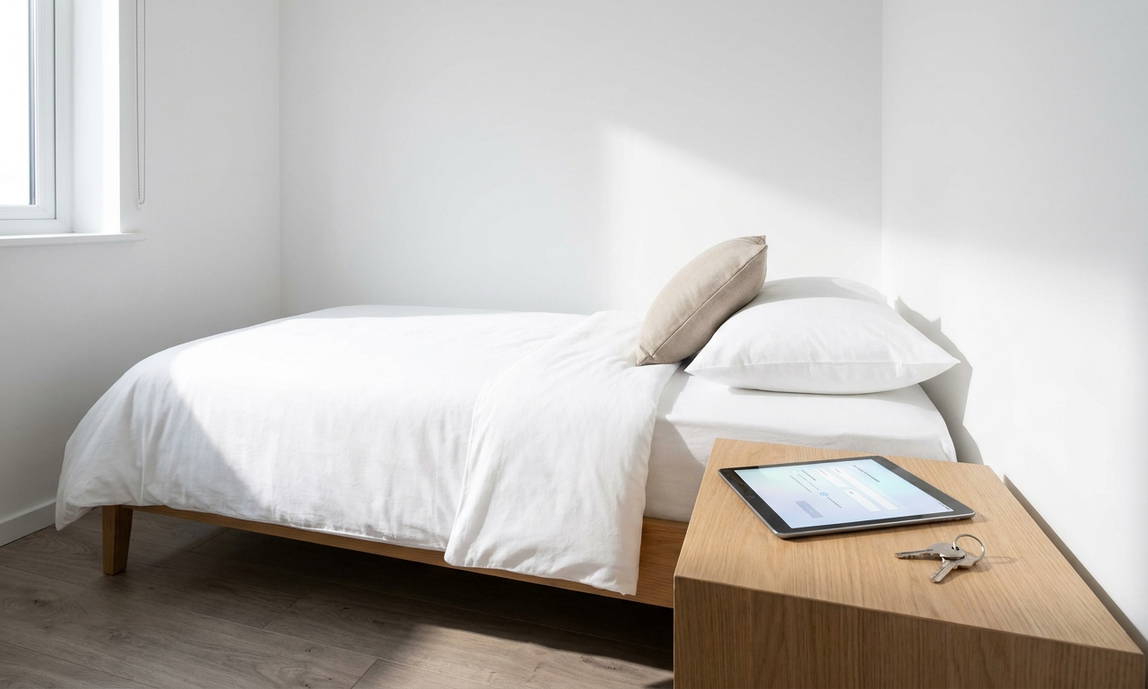
Faced with inflation and the persistent housing shortage in major Swiss urban centers, sharing your apartment has never been more relevant. Many tenants are considering hosting a student or young professional to ease their monthly expenses. However, with recent political debates, many are wondering if this practice is still permitted. Subletting in Switzerland in 2026 is at the heart of all questions, especially after the legislative turmoil of recent years. At Roomlala, we support thousands of hosts and tenants in their efforts every day. Our mission is to provide you with a clear and secure framework. In this article, we break down the current state of tenancy law regarding subletting for you, so that you can offer your room with complete peace of mind and in the strictest compliance with Swiss law.
Subletting in Switzerland 2026: What the Code of Obligations says
The Swiss legislative landscape has seen some tense moments recently, but tenants can now breathe easy. The draft revision of the Code of Obligations, which aimed to drastically restrict the right to sublet, was definitively rejected by popular vote on November 24, 2024. This massive rejection by the population has helped maintain a favorable and flexible legal framework for tenants. In 2026, subletting therefore remains a fundamental right guaranteed by Article 262 of the Code of Obligations (CO). This stability is excellent news for anyone looking to earn income from an unoccupied room.
Read also: Subletting in Switzerland in 2026: The real rules for renting out your room, 2026 Housing Law: What is changing for room rentals in Spain and Local Accommodation 2026: Why choose long-term rentals in Portugal
Concretely, what does this mean for your right to sublet? First of all, the strict limitation of the subletting duration to two years, which was at the heart of the aborted 2024 reform, never entered into force. You can therefore absolutely sublet a room for an indefinite period, as long as you intend to return to live in the entire home in the future or continue to reside there in parallel. This flexibility is particularly well-suited for long-term shared housing or hosting students over several academic years.
Moreover, it is crucial to know that any clause included in your main lease that prohibits subletting in principle is legally void. Many real estate management agencies still try to include standard restrictive clauses, but federal law always takes precedence over these contracts. If your lease states that "subletting is formally prohibited," this statement has no legal value before the Tenancy Court. You retain your inalienable right to share your home.
Let's take a concrete example: Sophie, a tenant of a 4-room apartment in Geneva, saw her children leave the family nest. Her lease, signed in 2015, indicated a prohibition on subletting. Thanks to the maintenance of Article 262 of the CO, Sophie was able to ignore this abusive clause. By following the legal steps we will detail, she is now hosting an international intern via Roomlala, thus supplementing her income completely legally without fear of eviction.
Landlord consent for subletting: The golden rule to respect
While the right to sublet is guaranteed, it is not unconditional. The absolute rule, which has not changed in 2026, is the obligation to obtain landlord consent for subletting. You cannot under any circumstances host a subtenant without first informing your landlord or your real estate agency. Proceeding with clandestine subletting is a serious violation of the main lease agreement. This exposes the tenant to early and immediate termination of their lease, with a notice period of only 30 days by the end of a month.
However, rest assured: the landlord cannot refuse your request arbitrarily. The law is very clear and limits the reasons for refusal to three specific situations. First, if you refuse to provide them with the terms of the subletting (identity of the subtenant, amount of rent, duration). Second, if the terms of the subletting are abusive, particularly if you are making an excessive profit. Third, if the subletting presents major disadvantages for the landlord, for example if you sublet a room in a strictly family building to a group of musicians who practice at night.
It is therefore imperative to do things properly. At Roomlala, we always advise formalizing this process in writing. Although the law does not formally require a written form, a registered letter with acknowledgment of receipt is your best legal weapon in the event of a dispute. This document will prove that you acted transparently and in good faith, thus protecting your own right to housing.
A classic use case is that of Marc, a tenant in Zurich, who went on a sabbatical trip for six months. He sent a complete file to his agency detailing the profile of his temporary subtenant and the exact rent requested. Faced with this transparency, the agency had no legal grounds for refusal and validated the request in less than two weeks, allowing Marc to leave with peace of mind.
How to write your request to the landlord or real estate agency?
For your request to be unassailable, it must be exhaustive. Your letter must imperatively mention the first and last name of your future subtenant, the start date of the subletting, the expected duration (even if it is indefinite), the number of rooms sublet, and, above all, the exact rent you will charge. We strongly recommend that you attach a copy of the draft sublet agreement to your mailing.
Timing is also crucial. Do not wait until the day before your subtenant moves in to send your request. Ideally, send your registered letter at least 30 to 60 days before the expected start date. This gives the agency time to process the file and respond officially. Proper anticipation demonstrates your professionalism and greatly facilitates relations with your building's management.
What if the agency turns a deaf ear and does not respond to your letter? Under Swiss law, the silence of the landlord after a complete request sent in time does not automatically constitute acceptance, but it puts you in a position of strength. If you have proof of receipt of your letter and your subletting does not present any legal grounds for refusal, you can generally proceed with hosting your subtenant. In the event of a subsequent challenge, courts often consider that the landlord abused their right by not responding.
Setting the rent for your room: Avoiding abusive profits
One of the most important points of vigilance regarding subletting concerns rent setting. Swiss law is uncompromising on this point: subletting must not generate any abusive profit for the main tenant. The goal of subletting is to share housing costs, not to get rich at the expense of the subtenant or the landlord. If the agency discovers that you are making a lucrative profit, they have the right to refuse the subletting or terminate your lease.
The calculation of the rent must therefore be strictly proportional to the area rented and the use of common areas. To determine the fair price, you must take the amount of your main rent (including charges) and divide it by the total area of your apartment. Then, you multiply this price per square meter by the area of the sublet room, to which you add a share for the use of shared spaces (kitchen, bathroom, living room).
If you rent the room furnished, which is generally the case on Roomlala, Swiss case law tolerates a reasonable surcharge on the rent to compensate for the wear and tear of your furniture and equipment. This surcharge is generally accepted to be between 10% and 20% of the proportional rent of the room, depending on the quality and value of the furniture provided. It is essential to be able to justify this surcharge in the event of an inspection by the agency.
Let's take a calculation example in Lausanne. You rent a 4-room apartment (80m2) for 2000 CHF per month. You are subletting a 15m2 room. The common areas represent 40m2. The subtenant therefore enjoys their room (15m2) + half of the common areas (20m2), i.e., 35m2 in total. The strict proportional rent would be (2000 / 80) * 35 = 875 CHF. By adding a 15% surcharge for the furniture and access to your internet connection, you can legally set the rent for the room at approximately 1000 CHF per month.
Swiss homestay law and cantonal specifics
It is important to distinguish between long-term shared housing and very short-term tourist-style rentals. Although federal law (the CO) applies to all forms of subletting, cantons and municipalities have the right to impose additional restrictions, particularly to combat the housing shortage. Swiss homestay law can therefore vary significantly depending on whether you are in Geneva, Vaud, or Zurich.
For example, the canton of Geneva imposes strict rules on repeated short-term sublets, which may be reclassified as a change in the use of the accommodation, requiring state authorization. On the other hand, if you host a student for a semester or a year via Roomlala, you remain within the classic framework of long-term subletting, which is much less affected by these cantonal restrictions. Always check with your municipality if you have any doubts.
Finally, don't forget the tax aspect. Income generated by a sublet, even if it is only used to cover part of your rent, must theoretically be declared for tax purposes. However, since you are simultaneously deducting the corresponding share of the rent from your own expenses, the operation is fiscally neutral in the majority of cases, since there is no net profit. Transparency with the tax authorities is the best policy.
Shared housing legality in Switzerland: Your responsibilities as a main tenant
Engaging in shared housing legality in Switzerland involves fully understanding the chain of responsibilities. As the main tenant, you sign a sublease agreement with your guest. However, vis-à-vis your landlord or your agency, you remain the sole and exclusive legal contact. You retain full legal responsibility for the home. If your subtenant does not pay their share of the rent, it is up to you to cover the shortfall to pay the total main rent to the agency.
This responsibility also extends to the maintenance of the home and any potential material damage. If the subtenant damages the paint, breaks an appliance, or scratches the floor, the landlord will come after you, and it is your security deposit that will be affected at the end of the lease. This is why it is fundamental to properly manage the contractual relationship with your subtenant.
To protect yourself, you must demand two essential things before handing over the keys: a security deposit (generally equivalent to one or two months of the room's rent) and proof of private personal liability insurance (RC) in the name of the subtenant. Thus, in the event of damage caused by the latter, it is their insurance that will cover the repairs, preventing you from having to dip into your savings or lose your own security deposit.
Imagine a frequent use case: your subtenant lets the bathtub overflow, causing water damage. In the eyes of the agency, you are responsible. However, if you have followed our advice and verified their liability insurance when signing the sublease agreement, your subtenant's insurance will intervene directly to compensate the landlord, settling the dispute without impacting your personal finances.
How Roomlala secures your subletting process
Navigating the waters of tenancy law can seem complex, but that is precisely where we come in. At Roomlala, we have designed our platform to offer you a serene, legal, and secure subletting experience. We know that trust is the pillar of a successful cohabitation, which is why we provide you with concrete tools to protect your interests as a main tenant.
First of all, our matching system is based on verified profiles. You have access to reviews, identity verifications, and can communicate via our secure messaging system before accepting a booking. In addition, rent payments are processed through our platform, which guarantees that you receive your money on time, thus eliminating the risks of unpaid rent that are the biggest fear of main tenants.
Next, we support you on the administrative front. Roomlala provides you with clear sublease agreement templates that comply with Swiss law. These pre-filled contracts include all necessary clauses (duration, notice period, inventory of furniture, house rules) to legally govern your shared housing. You no longer need to improvise a document on a scrap of paper.
In summary, subletting in Switzerland in 2026 remains a fantastic opportunity, protected by law, provided you respect the landlord's consent obligation and the prohibition of abusive profit. By using Roomlala, you ensure you find the ideal candidate while benefiting from a structured framework that respects your legal duties. Don't wait any longer to make the most of your available space and make great personal connections, completely legally!




There are no comments yet.
Add a comment
You must be logged in to post a comment.