
 SEARCH
 LIST YOUR PROPERTY
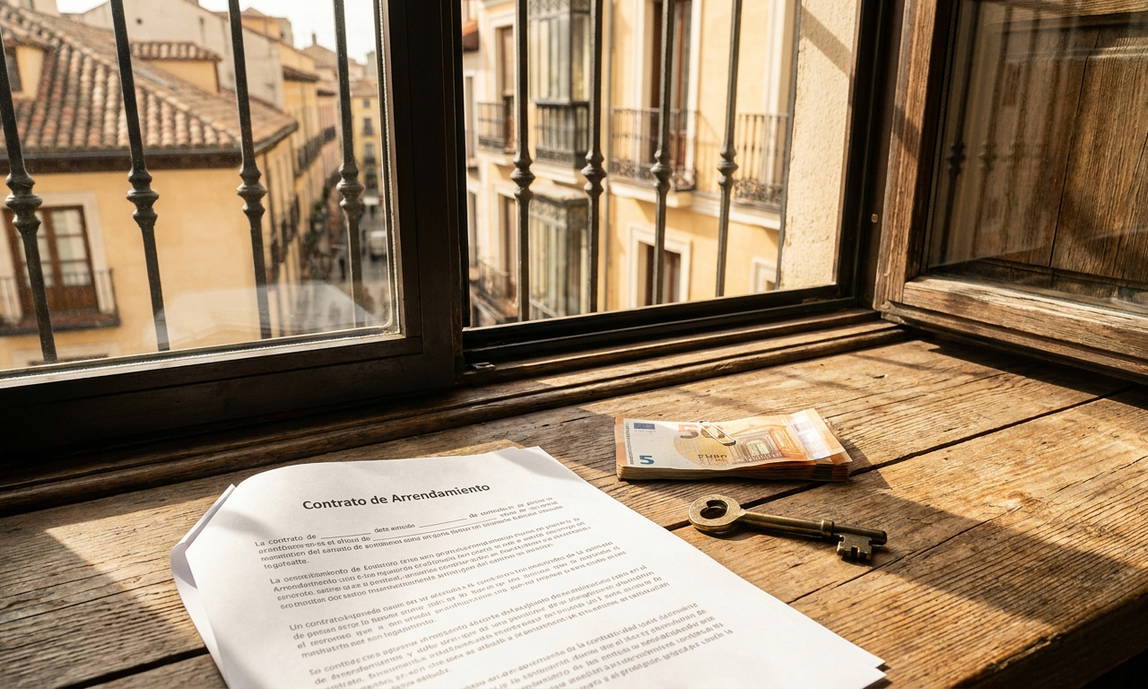
Spain is going through an unprecedented housing crisis. Faced with restrictions from the new housing law that cap rents for standard leases in high-demand areas, many Spanish hosts have found a formidable workaround. They are turning in droves to renting out individual rooms. This exclusive deep dive immerses you in the heart of this trend, which is boosting the supply of shared housing and represents a major opportunity for hosts on Roomlala.
Why is the rental of rooms in Spain exploding in 2026?
Since the introduction of Spain's housing law, known as the Ley de Vivienda, the Iberian real estate market has been severely shaken. By capping rents for standard leases in so-called "stressed" areas, the government hoped to provide relief to tenants facing real estate inflation. However, faced with these drastic restrictions, many hosts sought legal alternatives to maintain their income. This is how we are witnessing a real boom in room rentals in Spain, a solution that is completely redrawing the country's rental landscape in 2026.
Read also: Student housing shortage in 2026: Homestay solutions as a key strategy for the new academic year, Housing crisis in Portugal: 2026 tax incentives for room rentals and Temporary rental fraud in Spain: New 2026 rules to secure long-term shared housing
Historically, renting individual rooms did not fall under the Urban Leases Act (LAU) that governs entire homes, but rather under the Spanish Civil Code. This major legal nuance created a real legal loophole. By renting by the room, hosts could until recently dodge the rent caps imposed in high-demand areas, freely setting prices according to the law of supply and demand. At Roomlala, we have observed this massive shift of hosts to our platform to offer individual rooms in a flexible manner.
Recent statistics are dizzying and confirm this underlying trend. According to reports from the portal Idealista, the supply of room rentals has jumped by more than 20% nationwide, reaching a record year-on-year increase of 24% in certain highly sought-after regions. This spectacular explosion in supply is responding to an equally phenomenal demand, driven by tenants who can no longer find affordable entire homes on the traditional market.
Let's take a concrete example to illustrate this phenomenon. A host owning a four-bedroom apartment in Valencia, subject to a strict cap of 900 euros for a standard rental, quickly understood the financial benefit. By dividing his property and renting out three separate rooms at 400 euros each, he now generates 1,200 euros in monthly income. This homestay profitability, coupled with increased flexibility in managing leases, explains why so many hosts have taken the plunge in recent years.
The crazy figures of shared housing in Spain: Prices and demand
Rents reaching new heights in major cities
The unprecedented craze for shared housing in Spain in 2026 has logically led to a surge in prices, particularly marked in the country's major metropolises. Barcelona holds the absolute record in this area, establishing itself as the most expensive city in Spain with an average rent of around 600 euros per month for a single room. The capital, Madrid, follows very closely behind, posting monthly averages around 550 euros.
This continuous rise in prices is explained by a demand pressure that remains exceptionally high throughout the country. In the current Spanish market, the numbers are staggering: there are on average 22 candidates for every room put up for rent. This fierce competition pushes candidates to multiply visits, increase their budget, and prepare flawless applications to hope to land a decent place to live.
At Roomlala, we make it a point of honor to facilitate these complex steps. We know exactly how stressful the search can be for tenants and how time-consuming the management can be for hosts. Our platform allows you to effectively filter profiles, communicate in complete safety, and confirm bookings online, thus offering a space of trust that is essential in the middle of this ultra-competitive market.
Imagine the case of Lucas, a French student going on a university exchange at the Complutense University of Madrid. Faced with the local shortage and 22 competitors per listing, he used Roomlala several months in advance to book his room at Maria's, an experienced Madrid-based host. He was thus able to secure his housing at 500 euros per month, avoiding the immense stress of searching on-site and the potential scams related to urgency.
Typical tenant profiles and host profitability
While university students remain a major and historical target audience, the profile of tenants in shared housing has evolved considerably over the years. We are seeing more and more young professionals, workers on precarious contracts, and international digital nomads turning to room rentals in Spain. The financial impossibility of renting an entire apartment alone is pushing increasingly varied and older profiles towards this shared solution.
For hosts, this diversification of profiles is a real boon that significantly boosts homestay profitability. Not only do the cumulative revenues often exceed those of a capped standard rental, but the risk of non-payment is also significantly diluted. If a tenant defaults or leaves the property, the other rooms continue to generate regular income, thus securing the host's real estate investment.
Furthermore, the overall maintenance of the property is often much better ensured in this type of configuration. Room tenants, having generally shorter leases and shared common spaces, are subject to strict rules of conduct established by the host. Hosts thus keep better control over the general state of their property, which significantly limits long-term repair costs.
This is exactly the case for Carlos, an active retiree living in the heart of Seville. With a large house whose children left long ago, he rents out two rooms on Roomlala. Not only does he secure a very comfortable retirement supplement of 700 euros per month, but he also enjoys the enriching company of young international professionals, while retaining total control and maintenance of his home.
The end of the Eldorado? The tightening of the Ley de Vivienda on shared housing
New strict rules for 2025-2026
Faced with this massive circumvention of rent caps, the Spanish government has decided to react vigorously to regulate the market. The year 2026 marks a decisive turning point with the application of new national guidelines aimed at strictly regulating the Ley de Vivienda for shared housing. The political objective is clear: to definitively close the Civil Code loophole and bring affordable prices back to the overall rental market.
The flagship and most feared measure of this new regulation now requires that the sum of the rents of the various rooms rented separately does not exceed the maximum authorized rental price for the entire property, if it is located in a high-demand area. Gone are the days when a host could impunity double their income by dividing their apartment without any overall pricing limit.
Some autonomous Spanish regions are going even further in regulation. Catalonia, for example, has introduced new mandatory registers for hosts renting by the room, accompanied by strict administrative controls. Hosts must now declare their activity in a completely transparent manner, under penalty of exposing themselves to particularly heavy and dissuasive financial fines.
As a concrete example, if an apartment located in the center of Barcelona is capped at 1,200 euros according to the new government reference index, the host renting out three rooms will no longer be able to demand 500 euros per room (or 1,500 euros in total). They will be required to adjust their prices downward so that the total sum scrupulously respects the legal cap of 1,200 euros, thus deeply changing the calculation of their profitability.
The crucial importance of justifying the reason for the stay
The other major point of vigilance in 2026 concerns the very legal nature of the rental contract. For the lease to remain under the aegis of temporary rental (and thus benefit from the flexibility associated with the Civil Code), it is absolutely imperative that the rented room does not constitute the tenant's primary and permanent residence.
It has therefore become crucial and mandatory for hosts to justify the temporality and the exact reason for the stay. Whether it is for university studies, a company internship, a fixed-term employment contract, or even a specific medical treatment, the reason for the tenant's temporary presence must be explicitly mentioned and proven by documents attached to the contract.
In the absence of these solid supporting documents, the legal risk is immense: Spanish courts can reclassify the room contract into a standard residential lease (subject to the strict LAU). This reclassification would immediately expose the host to the strictest rent caps, the legal obligation to renew the lease over several years (up to 5 or 7 years), and potential retroactive financial sanctions that are very penalizing.
At Roomlala, we support our hosts step by step to avoid these major legal pitfalls. Our internal messaging system makes it easy and secure to request the necessary supporting documents (school certificate, temporary work contract) before definitively accepting a booking. We strongly encourage all our users to clearly define the duration and purpose of the stay from the very first exchanges to ensure a worry-free rental.
How to succeed with your homestay rental in Spain in 2026?
Despite this undeniable legislative hardening, room rentals in Spain remain an excellent opportunity, both in terms of real estate and human connection, provided you adapt intelligently to the new rules of the game. The key to success today lies in the professionalization of the rental process and in total transparency with the public administration and tenants.
To help you navigate this changing Spanish market with peace of mind, here are our best practical and proven tips:
- Check local regulations: Laws and obligations differ greatly between Madrid, Andalusia, or Catalonia. Find out exactly about the mandatory registers of your autonomous community.
- Draft ultra-precise contracts: Always mention in writing the temporary reason for the stay (studies, seasonal work, digital nomadism) to avoid any reclassification as a standard lease.
- Adjust your prices intelligently: Carefully calculate the sum of your rents per room to ensure that it never exceeds the overall cap of the property if you are located in a high-demand area.
- Rigourously select your tenants: Systematically favor profiles that can provide clear and official proof of their temporary situation in Spain.
By scrupulously applying these common-sense rules, you secure your rental income while providing a housing service that has become indispensable in the face of the housing crisis. At Roomlala, we continue to innovate every day to provide you with tools adapted to these new realities: compliant contract templates, strict identity verification, and secure payments that guarantee absolute peace of mind for both hosts and tenants.
In conclusion, shared housing in Spain in 2026 has definitively lost its legal "wild west" status to become a mature, regulated, and professional market. While the total price loophole is no longer permitted, renting out individual rooms remains a fundamental and highly profitable pillar of shared living. Join the large Roomlala community today to rent your rooms legally, maximize your income, and enjoy an enriching human experience.





There are no comments yet.
Add a comment
You must be logged in to post a comment.