
 SEARCH
 LIST YOUR PROPERTY
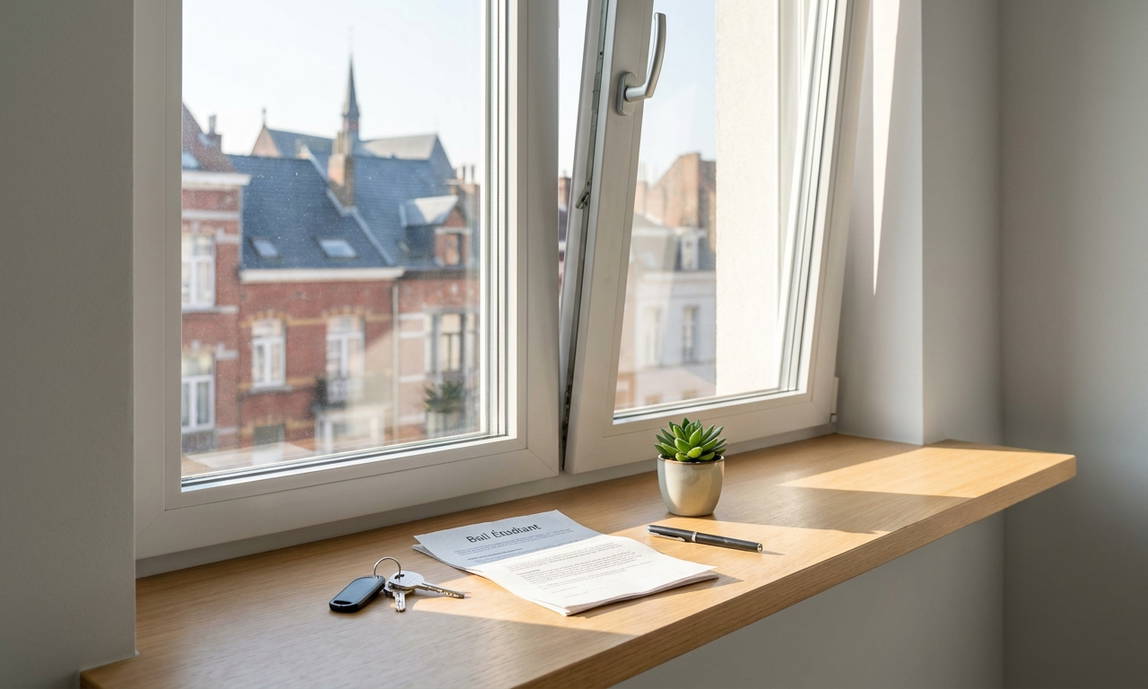
At the dawn of the start of the 2026 academic year, the European capital faces a major challenge: housing its students. With more than 127,000 young people enrolled in higher education institutions in the region and a student housing coverage rate of approximately 30%, the shortage of student rooms is intensifying dramatically. Faced with this situation, shared housing and renting out rooms in a host's home are literally exploding. But be careful: renting to a student cannot be improvised. The Brussels-Capital Region has a very specific legal framework designed to protect both young people and hosts. At Roomlala, we are committed to supporting you in this adventure. Whether you are a host looking to monetize an unoccupied room or a student in the midst of a search, this article deciphers the rules for the 2026 Brussels student lease for you so you can approach this new academic year with complete peace of mind.
2026 Brussels student lease: How exactly does it work?
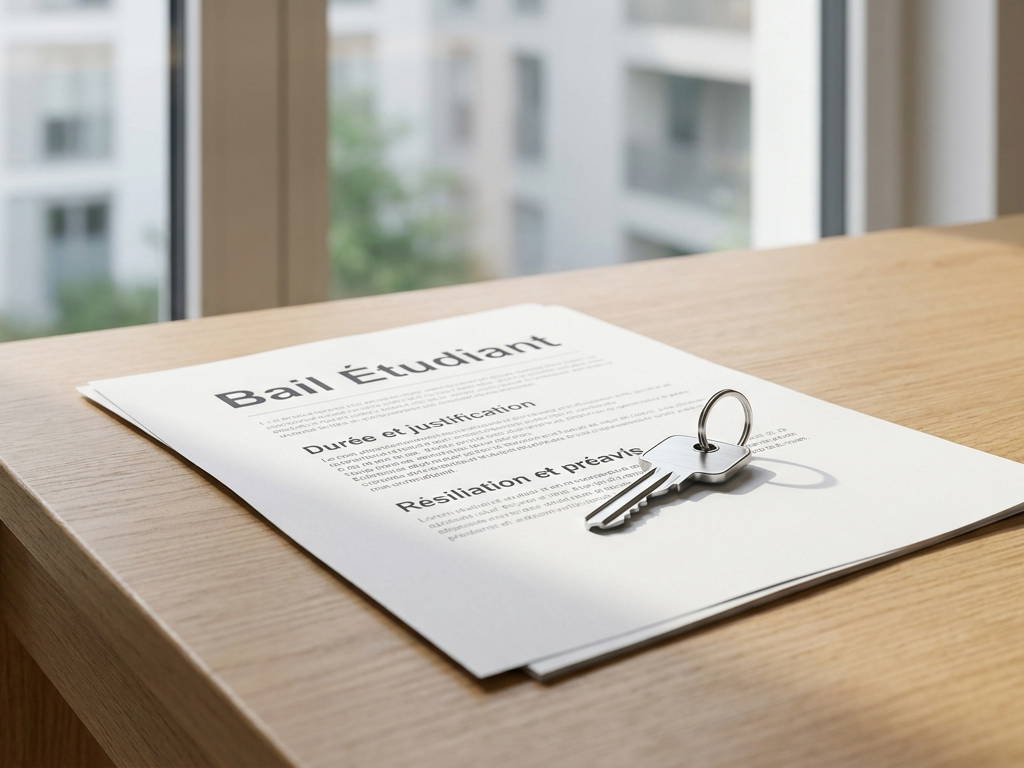
The student lease in the Brussels-Capital Region is a derogatory rental contract, specifically designed to adapt to the rhythm of academic life. Unlike a standard 3 or 9-year primary residence lease, it offers the flexibility essential to both parties. However, for this specific regime to apply, several strict conditions must be met. At Roomlala, we ensure our users understand these nuances to avoid any reclassification of the contract.
Read also: Student housing shortage in 2026: Homestay solutions as a key strategy for the new academic year, Housing crisis in Portugal: 2026 tax incentives for room rentals and Temporary rental fraud in Spain: New 2026 rules to secure long-term shared housing
Proof of enrollment: a sine qua non condition
For a rental contract to be legally classified as a student lease, the tenant must imperatively prove their status. They are required to provide the host with proof of regular enrollment in a higher education institution. If the student is still waiting for their results or acceptance, simple proof of an application for enrollment is tolerated at the time of signing.
However, this tolerance has its limits. The tenant has a strict deadline (generally two months after the start of the lease) to provide the final certificate of enrollment. Use case: Imagine you rent your room to Lucas starting August 1st, but his university does not validate his enrollment until mid-September. Lucas must provide you with his provisional enrollment certificate in August, then the final document in September. If the student fails to provide this document, the contract could be reclassified as a standard primary residence lease, thereby subjecting you to much more rigid termination rules.
Contract duration and renewal rules
The Brussels legal framework is very clear regarding timing: a student lease is concluded for a maximum duration of 12 months. This duration is ideal because it covers the entire academic year, including the August exam session. This contract is then renewable for successive one-year periods, under the same rent conditions (excluding annual legal indexation).
There is a crucial point of vigilance that we often remind our Roomlala hosts: what happens if you sign a 10-month lease (for example, from September to June) and neither you nor the student terminates the contract on time? The law states that if a student lease of less than 12 months is not terminated in time, it automatically turns into a one-year lease, thus extending the contract for two additional months not initially planned. It is therefore vital to be rigorous regarding dates and notice periods.
Termination and notice: What are your rights?
The great strength of the legislation surrounding the 2026 Brussels student lease lies in its flexibility for termination. Student life is full of the unexpected: reorientation, internships abroad, or dropping out of studies. The legislator has therefore provided mechanisms for early exit, while protecting the landlord against prolonged rental vacancy.
From the student tenant's side
The student enjoys almost total freedom. They can terminate their lease contract at any time, without having to justify a specific reason. To do so, they simply need to respect a 2-month notice period. Unlike standard short-term leases, the student will not have to pay any termination indemnity (the famous penalty months do not exist here).
Concrete example: Marie, a French student, decides in November to stop her studies in Brussels to return to Paris. She sends her notice by registered mail on November 15. Her 2-month notice will begin on December 1st and will end on January 31st. She will only have to pay her rent until that date, without any additional penalty. At Roomlala, we always encourage transparent communication so the host can anticipate and find a new tenant quickly.
From the host's side
The host, on the other hand, is subject to much stricter rules in order to guarantee the student's stability during their school year. The landlord cannot terminate the lease during the year. They can only end the contract at its expiry (generally after 10 or 12 months), and this requires a 3-month notice period notified before the end date.
If the host wishes to recover their room to house a member of their own family (a child starting their studies, for example), they must scrupulously respect this 3-month deadline before the expiry of the current lease. This asymmetry of rights is intended by law to avoid a young person finding themselves on the street in the middle of exam season. This is why we advise our hosts to set up reminders in their calendar so they do not miss any legal deadlines.
Brussels shared housing rules: When sharing takes precedence over the student lease
With rents rising and an insufficient supply of studios, Brussels shared housing rules is becoming an essential query. Many students group together to rent large apartments or entire houses. However, it is essential to understand that from a legal standpoint, the shared housing regime often takes precedence over the student lease regime when several tenants sign one and the same contract.
The mandatory shared housing pact
Since the lease reform in the Brussels Region, shared housing is strictly regulated. The flagship measure is the absolute obligation to sign a "shared housing pact" as an annex to the main lease. This internal document for housemates is essential to govern community life and prevent conflicts that could spill over into the relationship with the host.
What must this pact contain? It must detail the distribution of rent among the housemates, the cost-sharing key (who pays for water, electricity, internet), rules of communal living, and, above all, the management of the security deposit and any potential damages. Use case: If three students rent your property and one of them breaks the ceramic hob, the shared housing pact defines how repair costs are assumed internally, thus avoiding the host having to play referee.
The solidarity clause: what you need to know
The other fundamental aspect of shared housing is the solidarity clause. By signing a single lease for shared housing, students are generally bound by indivisible solidarity toward the host. This means that if one housemate does not pay their share of the rent, the landlord has the right to claim the full amount from the other housemates.
This rule offers maximum security to the host, but it implies great responsibility for the students. Furthermore, if one of the students wishes to leave the shared housing during the year, they must not only give their notice but they remain jointly liable for the payment of the rent (for a duration limited to 6 months) unless a replacement is found and accepted by the other housemates and the host. At Roomlala, we provide clear contract templates so everyone understands their commitments before the keys are handed over.
Renting a student room in Belgium: New 2026 health and safety standards
If you are considering renting a student room in Belgium, and more particularly in Brussels, you must prepare for a major regulatory change. On January 1, 2026, new regional minimum quality and health standards for housing come into force. These standards aim to eradicate "slumlords" and ensure dignified living conditions for all tenants.
These new directives impose strict criteria regarding fire safety (mandatory detectors, fire doors in certain buildings), ventilation of rooms to prevent humidity, access to natural light, and minimum surface areas per occupant. For example, a room rented to a student will have to respect strict minimum volume and surface area requirements, at the risk of the housing being declared unfit for habitation.
There is also a strong emphasis on energy performance (EPC certificate). Hosts will need to ensure that rooms are properly heated and insulated. Example: A host who converts their attic to house a student will have to prove that the roof insulation meets 2026 standards and that the access staircase is secure.
We know that these requirements can seem intimidating for individuals who simply wish to rent out a spare room. That is why Roomlala provides its community with detailed guides and compliance checklists. Our goal is to help you add value to your property while scrupulously respecting the Brussels student housing legislation, thus guaranteeing you a rental experience without administrative hassles or legal risks.
Hosting a student with Roomlala: The solution to the shortage
The start of the 2026 academic year promises to be tight on the student housing front in Brussels. With a structural deficit of student rooms, renting out rooms in a host's home is no longer just an economic alternative; it is an absolute necessity for thousands of young people. As a host, opening your doors represents an exceptional human and financial opportunity.
By hosting a student in your home, you benefit from a significant supplementary income, often subject to favorable taxation if you respect the legal caps. For their part, the student finds a calm, secure, and often much warmer work environment than an isolated student room. It is a true win-win exchange that fosters intergenerational and intercultural bonds.
At Roomlala, we do everything in our power to secure this process. Our platform verifies tenant profiles, secures online payments to avoid non-payment, and offers insurance adapted to cover potential damages. You retain full control over the choice of your tenant and the availability dates for your room.
By mastering the subtleties of the Brussels student lease and relying on a trusted platform like Roomlala, you have all the cards in hand to make your 2026 academic year a success. Do not wait for the shortage to worsen: publish your listing today, help a student find a place to live, and enjoy a rich and serene hosting experience.





There are no comments yet.
Add a comment
You must be logged in to post a comment.