
 SEARCH
 LIST YOUR PROPERTY
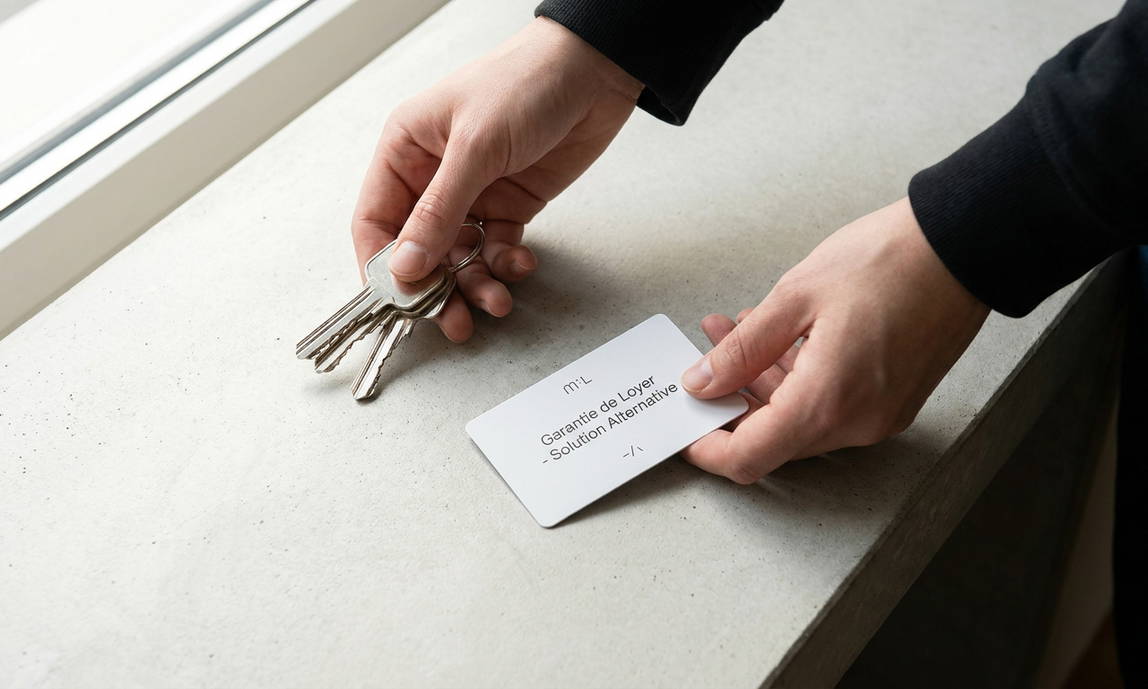
As the Swiss student back-to-school season of 2026 approaches, finding accommodation becomes the top priority for many students and young professionals. At Roomlala, we know how stressful this period can be, especially when it comes to managing your budget. One of the major financial obstacles remains the famous Swiss rent deposit, often required by landlords or property management agencies before handing over the keys. Being required to lock away the equivalent of three months' rent in a bank account represents a colossal sum that holds many applicants back. Fortunately, Swiss law provides legal alternatives, notably deposit insurance, to relieve you of this financial burden. In this detailed article, we break down all the legal solutions for you to avoid tying up your savings, whether you opt for traditional shared housing or for renting a homestay. Discover our expert advice to approach this new chapter with complete peace of mind.
Understanding the Swiss rent deposit and its legal limits
The strict framework of Article 257e of the Code of Obligations
In Switzerland, the rent deposit is not an absolute legal obligation, but it has become an essential standard in almost all lease agreements. Its purpose is to protect the landlord against potential unpaid rent or damage caused to the property. However, Swiss law is very protective of tenants. According to Article 257e of the Code of Obligations (CO), the amount of this deposit for a residential lease is strictly capped. The landlord can in no case demand more than three months of net rent, that is to say excluding utilities (heating costs, water, etc.).
Read also: Mobility lease 2026: The legal framework for renting out your room with total flexibility, Porta 65 housing assistance in 2026: What young tenants and hosts need to know in Portugal and Renting out a room in your home in Ontario: Decoding the Residential Tenancies Act for 2026
At Roomlala, we would like to remind you that if you choose the classic bank deposit method, this money cannot simply be transferred to the landlord's personal account. The law requires that the sum be deposited into a blocked bank account, opened in the tenant's name, specifically dedicated to the Swiss rent deposit. The interest generated by this account belongs to you, although it is currently very low. The account will remain blocked until the end of the lease and the return of the keys, subject to an inventory check at move-out without any disputes.
Let's take a concrete example to understand this well. Imagine that you find a studio in Geneva for a monthly rent of 1,200 CHF, with 100 CHF in utilities. The legal limit for the deposit will be calculated solely on the net rent. The landlord can therefore ask you for a maximum of 3,600 CHF (3 x 1,200 CHF). It is strictly illegal to base this calculation on the gross rent of 1,300 CHF. If a landlord asks you for a higher sum, you are entitled to contest this requirement by relying on the Code of Obligations.
It is crucial to master these rules well before signing your contract. Many tenants, through lack of knowledge of the law, accept abusive clauses. By knowing your rights, you ensure that you do not unnecessarily deplete your budget, a precaution that is all the more important as the 2026 Swiss student back-to-school season approaches, where every franc counts to finance your studies, your transport, and your equipment.
Specifics for a homestay lease
Renting a homestay is an increasingly popular accommodation solution. It offers a friendly, often less expensive environment, and allows for rapid immersion into local life. From a legal point of view, this type of rental generally equates to subletting (if the inhabitant is themselves a tenant) or a partial rental (if they are the owner). But what are the rules concerning the rent deposit in this specific case?
It is essential to know that the legal framework remains exactly the same. Within the framework of a homestay lease, the main tenant or the owner is fully entitled to require a rent deposit. However, this request remains subject to the same strict legal cap of three months of net rent maximum. Whether you are renting an entire home or just a room, Swiss law makes no distinction regarding tenant protection on this point.
At Roomlala, we always encourage transparency and security. If your host requests a deposit, it must also be placed in a blocked bank account in your name, or be the subject of deposit insurance, just as with a classic lease. It is not recommended to hand over this sum in cash without an official receipt and a written agreement stipulating the conditions for restitution. A clear contract protects both parties.
Take the case of Sophie, a young professional who is moving to Lausanne. She is renting a homestay for 600 CHF per month. Her host, the main tenant of the apartment, asks her for a deposit. In accordance with the law, he cannot demand more than 1,800 CHF. Sophie and her host agree to open a rental deposit account at a cantonal bank, thus ensuring that Sophie's money is secure and that it will be returned to her upon her departure if no damage is found in her room.
Deposit insurance: the leading solution for the 2026 Swiss student back-to-school season
How does this alternative to a bank deposit work?
To avoid locking up thousands of francs in a bank account, Swiss law authorizes a very popular alternative: a surety, often called rent deposit insurance. Instead of paying the total sum required by the landlord, you use a specialized company (such as SwissCaution, Firstcaution, or certain traditional insurers) that acts as a guarantor for you. In exchange for this service, you pay an registration fee and then an annual premium to this company.
The operation is simple and particularly suitable for lightening the budget during the 2026 Swiss student back-to-school season. Generally, the annual premium amounts to approximately 5% of the total amount of the deposit requested, to which administrative fees are sometimes added the first year. Once the contract is subscribed, the insurance company issues a certificate directly to the landlord or the property management agency, proving that the Swiss rent deposit is well established and secured.
The major advantage of this solution is the immediate release of liquidity. Rather than locking away 3,000 CHF that could be used to buy your furniture, pay your tuition fees, or finance your first few months of life in Switzerland, you only pay a fraction of this sum each year. In addition, the procedures are now extremely fast and can often be done entirely online, with an attestation issued in just a few hours.
For example, Lucas, a student arriving in Fribourg, must provide a deposit of 2,400 CHF for his new accommodation. Not having this sum, he opts for deposit insurance. He pays a premium of about 120 CHF per year. Thanks to this legal alternative, Lucas keeps his savings for his daily expenses, while offering his landlord the financial security required by the lease agreement.
Warnings from the ASLOCA: what you absolutely must know
If deposit insurance seems like a miracle solution, we at Roomlala must inform you with the greatest objectivity. The ASLOCA (Swiss Tenants' Association) regularly issues very clear warnings regarding this practice. The main point of vigilance is that the annual premiums paid to the insurance company are sunk costs. Unlike a classic bank deposit, you will never recover the premiums paid at the end of your lease.
In addition, there is a very frequent confusion among tenants: deposit insurance is not personal liability insurance (civil liability). If you cause damage to the property or if you have unpaid rent, the insurance company will not pay these costs for you permanently. Its role is only to advance the money to the landlord to compensate them quickly. Then, the company will turn against you to claim full reimbursement of the advanced sum.
It is therefore essential to understand that you remain financially responsible for all your contractual obligations. If you damage the floor of your room, the final bill will be your responsibility, whether or not you have subscribed to deposit insurance. This is why it is strongly advised to subscribe, in parallel, to a real private civil liability insurance, which will cover accidental damage caused to the rented property.
Let's take the example of Marc, who rented an apartment for three years with deposit insurance. He paid 150 CHF per year, or 450 CHF in total. Upon his departure, the landlord notes damages amounting to 800 CHF. The insurance company pays the 800 CHF to the landlord, then sends an 800 CHF invoice to Marc. In the end, Marc will have paid 1,250 CHF, whereas with a bank deposit, he would have only lost the 800 CHF withheld from his initial deposit. You must therefore weigh the pros and cons in the long term.
Managing the shared housing deposit: rules and best practices
The principle of solidarity between roommates
Shared housing is a highly sought-after option to reduce costs, but it involves specific legal rules, particularly regarding the deposit. When signing a joint lease (where all roommates sign the same contract), a single shared housing deposit is established for the entire property. Swiss law then applies the principle of joint and several liability. This means that each roommate is responsible for the entire rent and any potential damage, including that caused by others.
Regarding the Swiss rent deposit, the landlord will request a global amount, always capped at three months of the total net rent of the apartment. It is up to the roommates to organize among themselves to raise this sum or to jointly subscribe to deposit insurance. If you opt for a bank deposit, the account will generally be opened in the names of all roommates listed on the lease. No part of the deposit can be released without the landlord's agreement, even if one of the roommates leaves the property before the others.
This situation can become complex during early departures. If a roommate leaves and is replaced, the landlord will not return the portion of the deposit to the person leaving. It is up to the new roommate to reimburse the outgoing roommate directly, via a private agreement. At Roomlala, we advise you to draft an internal shared housing agreement from day one, clearly specifying how the shared housing deposit was financed and how it will be managed in the event of the departure of one of the members.
Imagine three students sharing a large apartment in Neuchâtel. The total deposit is 4,500 CHF. They decide to pay 1,500 CHF each into the blocked account. One year later, one of them leaves for an internship abroad. The landlord will not unblock the 1,500 CHF. The new arrival who will take over the room will have to pay 1,500 CHF to the departing roommate to buy their share of the deposit. A written record of this transaction is essential to avoid any disputes at the end of the lease.
Dividing deposit costs and choosing the right formula
Faced with a high shared housing deposit, roommates must consult to choose the best financing option. Two main choices are available to them: dividing the bank deposit into equal parts or jointly subscribing to deposit insurance. If a bank deposit is chosen, it is imperative that each member pays their share transparently. We recommend that you keep the proofs of transfers from each person to the common blocked account.
If the shared housing opts for deposit insurance, the process is slightly different. The insurance company will establish a contract in the name of all joint roommates. The annual premium (for example, 200 CHF for a 4,000 CHF deposit) will be divided among the members of the household. It is an excellent solution for student shared housing, because it allows everyone to pay only a small annual sum (about 66 CHF per person in our example) instead of locking away more than 1,300 CHF each.
However, you must keep in mind the warnings mentioned above. In the event of damage caused by a single roommate, if the insurance company advances the costs to the landlord, it will be able to claim reimbursement from any roommate, by virtue of the solidarity clause. It is therefore crucial to have absolute trust in your roommates and to establish strict house rules.
To secure your agreement, Roomlala suggests that you create an internal document listing the responsibilities of each person. Here are some points to include:
- The exact distribution of the payment of the annual insurance premium.
- The reimbursement procedure in the event of damage caused by a specific member.
- The procedures for transferring the deposit if a roommate leaves the joint lease.
- The obligation for each member to have their own civil liability insurance.
Convincing your landlord to accept a legal alternative
The absence of a legal obligation for the landlord
There is a legal reality that every future tenant must know: although deposit insurance is a legal and recognized alternative in Switzerland, the landlord or the property management agency has absolutely no legal obligation to accept it. The choice of the type of Swiss rent deposit belongs in the last resort to the landlord. If they demand a classic bank deposit of three months, you cannot impose an insurance company on them.
Why do some landlords refuse this alternative? Often, it is by habit or out of fear of administrative procedures. They believe that a blocked bank account offers more direct and immediate security. In addition, some small management agencies prefer to manage traditional bank deposits rather than dealing with third-party insurers in the event of a dispute upon the tenant's exit. It is therefore essential to obtain your landlord's prior agreement before starting any subscription process.
At Roomlala, we note that within the framework of a homestay lease, hosts are often more flexible and open to discussion than large real estate agencies. Nevertheless, the rule remains the same: communication is key. Do not wait for the day of signing the lease to announce that you do not have the funds for a bank deposit. Address the subject from your first exchanges or during the visit of the property.
For example, if you apply for a highly coveted apartment in Zurich for the 2026 Swiss student back-to-school season, arriving with a file automatically stipulating deposit insurance without having discussed it can work to your disadvantage compared to a candidate offering a bank deposit. You must know how to bring up the subject with tact and demonstrate that this solution is just as secure for the landlord.
Preparing a solid rental file and making arguments
To maximize your chances of having deposit insurance accepted, your rental file must be impeccable. You must reassure the landlord about your solvency and your seriousness. Start by proposing insurance companies recognized on the Swiss market (SwissCaution, Firstcaution, goCaution, etc.). Management agencies know these players well and know that their certificates are reliable and that payment in the event of a claim is guaranteed.
In your cover letter or during your interview with the landlord, explain your approach transparently. You can argue by explaining that using deposit insurance allows you to keep liquidity for other essential expenses related to your installation (purchase of furniture, study costs), which indirectly guarantees your ability to pay your monthly rent without difficulty. Emphasize that for the landlord, the financial coverage is exactly the same as with a blocked account.
To consolidate your request, do not hesitate to provide additional guarantees. An extract from the debt enforcement register showing no records is mandatory, but you can also add a letter of recommendation from your former landlord attesting to your exemplary behavior. If you are a student, a joint surety from a parent (who acts as a guarantor on the lease) in addition to the deposit insurance can definitively reassure a hesitant landlord.
In conclusion, although the rent deposit in Switzerland represents a significant challenge, legal alternatives exist and are widely democratized. Whether for shared housing or a homestay lease, the essential thing is to fully understand your rights, the legal limits, and the long-term financial implications of deposit insurance. At Roomlala, we are here to support you in all your housing procedures. Prepare your file with care, communicate openly with your future landlord, and approach the 2026 back-to-school season with confidence and peace of mind!




There are no comments yet.
Add a comment
You must be logged in to post a comment.