
 SEARCH
 LIST YOUR PROPERTY
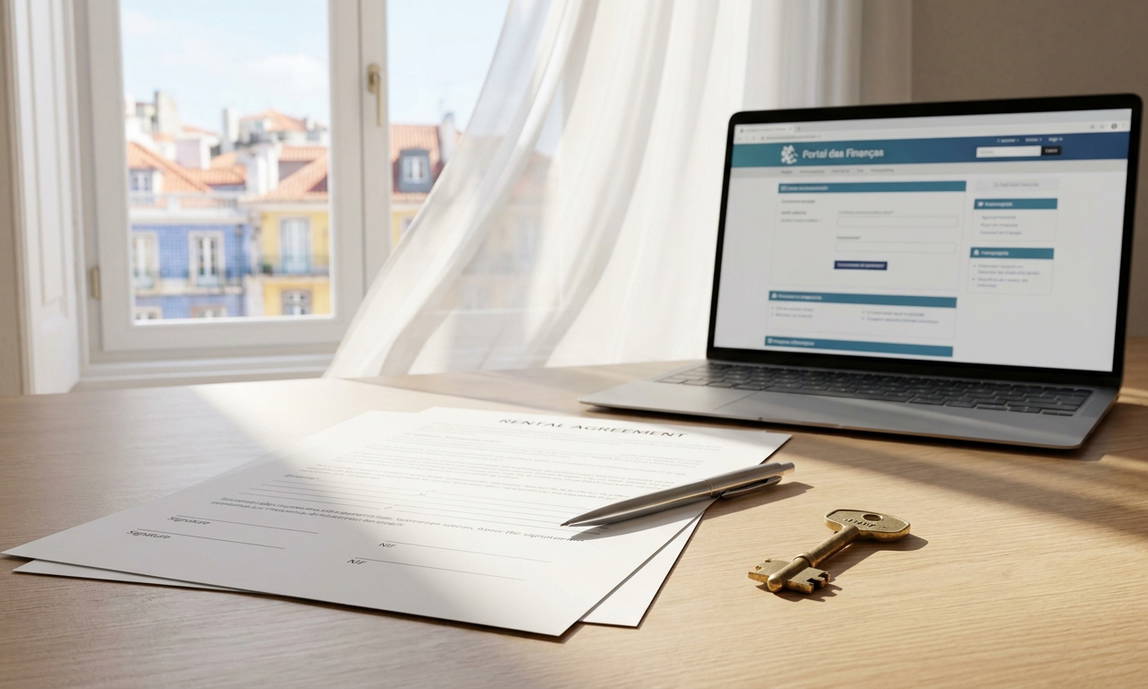
Faced with high demand for the start of the 2026 academic year, many Portuguese hosts are considering taking the step of renting out a spare room in their home. Whether you are located in Lisbon, Porto, Coimbra, or Faro, the student housing market is particularly tight, and offering a homestay is a solution that is both supportive and financially advantageous. However, Portuguese legislation strictly regulates these practices to protect all parties involved. At Roomlala, we know that administrative procedures can sometimes seem daunting. That is why we have designed this comprehensive guide to help you master the rental agreement for a room in Portugal. The goal is clear: to decode the 2026 regulatory framework, understand everyone's obligations, and allow you to rent or sublet with complete peace of mind.
The golden rules of a room rental agreement in Portugal in 2026
The first fundamental step for a successful and secure rental is drafting an official document. In Portugal, informal renting (often called the black market) is a risky practice that is heavily penalized. In 2026, a written rental agreement is strictly mandatory to rent a room, even if it is just a simple homestay. This document protects the host against unpaid rent or damages and guarantees the student tenant the right to occupy the premises peacefully.
Read also: Porta 65 Jovem program in 2026: How to finance your room in a shared housing in Portugal, Student lease vs. standard furnished lease: Which option should you choose for renting your room for the 2026 school year? and 2026 Student Back-to-School in Brussels: Everything you need to know about student leases and shared housing
For this agreement to be valid, it must include the Tax Identification Numbers (NIF) of both the host and the tenant. Without the student's NIF, no legal process can be completed. The document must also specify the duration of the rental, the exact amount of the rent, and a clear description of the room being rented and the common areas the student has access to (kitchen, bathroom, living room). At Roomlala, we recommend being as precise as possible in this description to avoid any misunderstandings during the academic year.
Once the document is signed by both parties, the host has a legal deadline of 30 days to register this agreement on the Portal das Finanças (the Portuguese tax portal). This registration triggers the payment of the Stamp Duty (Imposto de Selo), which is equivalent to 10% of one month's rent. For example, for a room rented at 400 euros per month, the host will have to pay a one-time tax of 40 euros upon registration. This is an unavoidable step to legalize the situation.
How to register the agreement on the Portal das Finanças?
The registration of the agreement is done entirely online, which greatly simplifies procedures in 2026. The host must log in to their personal space on the Portal das Finanças, go to the real estate section (Arrendamento), and select the option to report a new agreement. They will have to enter the NIFs of the parties, the start and end date of the agreement, the frequency of payments, and the rent amount.
Once the data is validated, the system automatically generates the collection document for the Stamp Duty. This amount can be paid via the Multibanco network or by bank transfer. It is crucial to keep proof of this registration and share it with the student, as they will need it to provide proof of residence and assert their own tax rights. If you skip this step, you expose yourself to severe fines and deprive your tenant of their benefits.
We often notice that some hosts hesitate to report for fear of complexity. However, the tax platform has been considerably optimized in recent years. Furthermore, reporting your agreement is the only way to be able to legally evict a difficult tenant or to use unpaid rent insurance. It is the price of peace of mind for the entire academic year.
The special case of student subletting
It frequently happens that a primary tenant, having an empty room in their apartment, wishes to sublet it to a student. In Portugal, subletting is legal, but it follows very strict rules. The primary tenant must obtain the written consent of their own landlord before subletting the room. Without this consent, the subletting is considered a breach of the primary agreement.
Once the consent is obtained, the primary tenant becomes, in the eyes of the Finanças, a sub-lessor. They must, in turn, draft a sublease agreement with the student and register it on the tax portal under the same conditions (30-day deadline, payment of stamp duty). This is a sine qua non condition for the student sub-tenant to benefit from their tax deductions.
At Roomlala, we strongly encourage transparency. If you are a tenant and wish to host a student, talk about it openly with your landlord. Highlight the benefits: a reassuring presence, help with paying the main rent, and a legal framework perfectly respected through registration with the Finanças.
Issuing electronic receipts: an obligation for hosts
For several years, and this is strongly confirmed in 2026, the issuance of electronic rent receipts (recibos de renda eletrónicos) is a legal obligation for almost all hosts in Portugal. No more paper receipt books: every rent payment must be accompanied by a receipt issued directly via the Portal das Finanças. This measure aims to fight tax evasion and ensure total transparency in the rental market.
In practice, as soon as the student pays their monthly rent, you must log in to your tax space, select the corresponding agreement, and issue the receipt. This document is then immediately available in the student's tax space. It is this electronic trail that will allow the Portuguese tax administration to automatically calculate the tax deductions to which the student is entitled at the end of the year. Without these electronic receipts, the student loses all their benefits.
There are, however, some exceptions to this all-digital rule. Hosts over the age of 65, or those receiving very low annual rental income (below a certain threshold set by the State), may be exempted from electronic issuance. However, they remain obligated to provide a compliant paper receipt (official template) and to report this income annually via the appropriate IRS form. If this is your case, we advise you to keep a copy of every signed paper receipt.
There are many points of vigilance regarding this obligation. Informal renting, characterized by the absence of an agreement and receipts, exposes the host to administrative fines ranging from 150 to 3,750 euros in case of an audit or report. Beyond the financial risk, it is a loss of trust for the tenant. By using a platform like Roomlala to find your tenant, you are committing to a process of mutual trust, where compliance with tax rules is the foundation of a peaceful cohabitation.
The "displaced student" (estudante deslocado) status: conditions and procedures
One of the most advantageous features of Portuguese legislation for young people is the tax status of "displaced student" (estudante deslocado). This status was designed to provide financial relief to families whose children must leave the family home to pursue higher education. In 2026, understanding and activating this status is a top priority for any student looking for a room, and a major selling point for hosts.
For this status to be recognized by the tax administration, the student's tax address must remain that of their permanent family residence (with their parents, for example). They must especially not change their tax address to that of the rented room, otherwise, they risk losing their status as a member of their parents' tax household and, consequently, the benefits linked to living away from home. The room rental agreement must of course include the student's NIF, but the address associated with this NIF remains the original address.
The activation of this status is not automatic. It requires a proactive step on the Portal das Finanças. Each year, the student (or their parents) must log in to the e-arrendamento section to indicate that the rental agreement registered by the host does indeed correspond to housing for a displaced student. This annual declaration is crucial and must generally be completed before a deadline set for February of the year following the rental.
Who is eligible for this status in 2026?
The eligibility criteria for the displaced student status are strict and cumulative. First, the young person must be under 25 years old. If they exceed this age during the course, they unfortunately lose this specific tax advantage. Second, they must be enrolled in a recognized educational institution (university, polytechnic institute) located more than 50 kilometers from their permanent family residence.
Let's take a concrete example: a 21-year-old whose family resides in Faro (Algarve) and who enrolls at the University of Coimbra. Since the distance is well over 50 km, they are perfectly eligible. On the other hand, a student from Setúbal who rents a room in Lisbon will have to verify the exact distance used by the Finanças, as the 50 km limit is sometimes a matter of just a few kilometers. At Roomlala, we advise students to verify this geographic aspect even before signing the agreement.
It is also important to note that the student must attend an educational institution that confers a recognized academic degree or professional diploma. Simple short-term language training or non-degree evening classes generally do not allow for unlocking this protective status.
Annual procedures on the Portal das Finanças
To benefit from the advantages, the student must indicate to the tax administration that the electronic receipts issued by their host are related to their studies. On the Portal das Finanças, in the invoice consultation module (e-fatura / e-arrendamento), the student must categorize their rent receipts under the Education (Educação) category and specify that these are expenses related to the displaced student status.
If the student rents a room in a shared housing situation where only one global agreement has been drawn up in the names of several tenants, the situation is a bit more complex. This is where the concept of the Portuguese shared housing agreement (Finanças contrat colocation PT) comes in. The host must issue separate receipts for each NIF, or clearly indicate everyone's share, so that each student can report their own portion of the rent as an education expense. This is why we recommend favoring the signing of individual agreements for each room rented.
The host does not have any additional steps to take regarding this status, other than having correctly registered the initial agreement as a residential lease (arrendamento habitacional) and issuing their receipts monthly. It is teamwork: the host provides the legal framework, and the student completes their declarations.
2026 Student room taxation: what are the advantages for the tenant and the host?
Respecting the legal framework is not just a matter of constraints; it is above all the key to unlocking major tax advantages. The 2026 student room taxation has been designed to encourage rent reporting by financially rewarding families. This is a significant argument that hosts can use to attract serious tenants who care about their rights.
For the displaced student (and their parents' tax household), the advantage is significant. The law allows for the deduction of 30% of the annual amount of rent paid on the income tax return (IRS). This deduction is capped at 400 euros per year. But the advantage does not stop there: thanks to this status, the overall cap on education expense deductions for the tax household increases from 800 euros to 1,100 euros. Thus, a family can deduct both classic tuition fees and a significant portion of the student room rent.
These rules make sense in large cities. If we look at the student rental rules in Lisbon, where room rents are among the highest in the country, the possibility of recovering 400 euros on your taxes is an essential financial relief for many families. In Lisbon, the city council and universities communicate heavily on the importance of requiring an agreement and receipts to fight student precarity.
For the host, reporting rental income allows you to stay in compliance with the law and avoid ruinous fines. But it also allows you to benefit from reductions in the tax rate on property income if the agreement is signed for a long duration. In Portugal, the longer the duration of the rental agreement, the lower the tax rate on the rent received. Although student agreements are often limited to 9 or 12 months (the duration of the academic year), the simple fact of renting in a legal framework enhances your property and ensures priceless peace of mind.
In conclusion, the 2026 academic year in Portugal promises to be dynamic. By mastering the rules of the rental agreement, issuing electronic receipts, and understanding the subtleties of the displaced student status, hosts and tenants can approach this period with complete confidence. At Roomlala, we are proud to accompany you on this human adventure, by offering you a secure platform to find the perfect room or tenant, in perfect compliance with Portuguese legislation.






There are no comments yet.
Add a comment
You must be logged in to post a comment.