
 SEARCH
 LIST YOUR PROPERTY
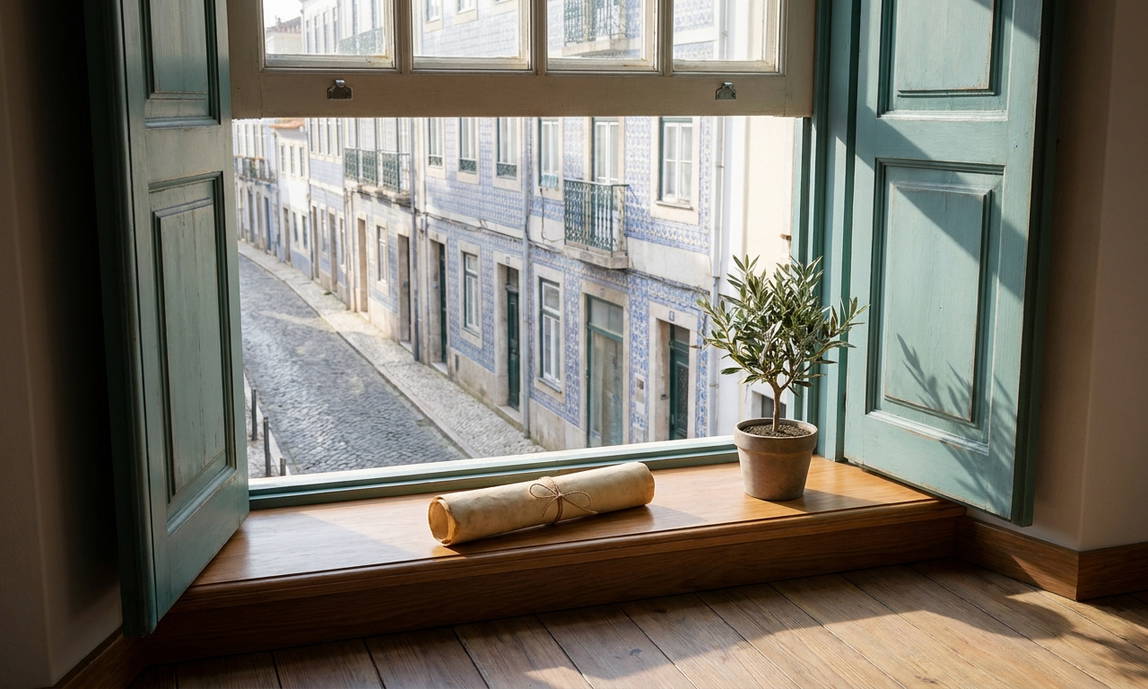
The end of the golden age of short-term tourist rentals in Portugal
If you are a host in Portugal, you have likely noticed that the tide has turned. The year 2026 marks a decisive and unprecedented turning point for Alojamento Local 2026 (AL). After years of uncertainty and legislative changes, the legal framework has tightened significantly, making seasonal rentals increasingly complex and risky for investors. At Roomlala, we follow these developments very closely to best support you in managing your property assets.
Many hosts mistakenly believe that current blockages are still linked to the famous national 'Mais Habitação' program. However, it is crucial to remember that the restrictive measures of this program were revoked in 2024. The real constraints you face in 2026 stem from two major new forces: extremely strict municipal quotas and automated control at the European level. Rental regulations in Portugal have never been so localized and, paradoxically, so closely monitored by Brussels.
Read also: 2026 rental reference rate in Switzerland: Shared housing to counter the increase, New EPB requirements in Brussels in 2026: What is the impact on renting out a room in your primary residence? and Generalization of the CIN in Italy 2026: What are the requirements for renting a room?
Facing this administrative obstacle course, one solution is increasingly becoming the obvious choice for securing your rental investment in Portugal: the transition to a traditional residential lease. Whether through homestays, shared housing, or medium-term leases, these alternatives offer stable profitability, favorable taxation, and above all, total peace of mind. In this article, we explain in detail why and how to adapt your rental strategy in 2026.
Alojamento Local 2026: Understanding the tightening of regulations
Power to the municipalities and Decree-Law 151/2026
The great revolution of recent years has been the decentralization of decision-making. Since Decree-Law 76/2024, the power to regulate Alojamento Local has been returned to the municipalities. City councils now decide the fate of licenses in their territory based on local housing pressure. Far from easing the rules, this decentralization has allowed the most tourist-heavy cities to shut the gates to protect the residential market for their inhabitants.
The situation crystallized even more recently. The new Decree-Law 151/2026, enacted in July 2026, drove the point home. This text officially authorizes cities to extend the outright suspension of issuing new AL licenses until December 31, 2026. For a host buying a property today in the hope of using it for short-term rentals, it is a brutal blow. City halls now have carte blanche to freeze the tourist market and force properties back toward traditional housing.
Practically speaking, if you own a vacant apartment and were hoping to obtain a license this autumn, your chances are almost non-existent in large urban areas. At Roomlala, we advise our hosts not to wait for a hypothetical unblocking in 2027, the outcome of which no one can guarantee. It is time to rethink the use of your property to generate immediate and legal income.
The European vice: Regulation 2024/1028
If you thought you could rent 'under the radar' or circumvent municipal suspensions, think again. Since May 20, 2026, Regulation (EU) 2024/1028 of the European Parliament and of the Council has been in full effect. This text imposes total transparency and mandatory technical collaboration between major tourist booking platforms and national and local public authorities.
What exactly does this regulation say? It requires all seasonal rental platforms to technically and systematically verify the AL registration numbers of published listings. If a listing is published without a valid number, or with a falsified number, the platform has a legal obligation to remove it automatically. Furthermore, rental data (number of nights, income) is shared with tax and municipal authorities.
Let’s take a concrete example: a host in Faro decides to rent their annex to tourists without an AL license, thinking they will go unnoticed. With the new 2026 regulation, their listing will be detected and blocked by the platform's algorithms within a few days, and their details could be transmitted to local authorities, exposing them to heavy fines. The gray market for tourist rentals is definitely over.
Local blockages: Focus on Lisbon and Porto
The end of new licenses in Lisbon's historic center
The Portuguese capital is the epicenter of the housing crisis and, consequently, the laboratory for restrictive policies. In Lisbon, the municipal Alojamento Local regulation (RMAL), which came into force at the end of 2025, dealt a fatal blow to new tourism projects in the city center. The flagship measure of this regulation was to lower the absolute containment threshold to 10%.
In short, as soon as a neighborhood has more than 10% of housing dedicated to AL compared to the total residential stock, it moves into an 'absolute containment zone.' In these areas, the issuance of any new license is strictly prohibited. Today, in 2026, this effectively blocks almost all the historic neighborhoods popular with tourists: Alfama, Baixa, Chiado, Bairro Alto, and even certain peripheral areas that have recently exceeded this threshold.
If you own a property in these neighborhoods, long-term rentals in Lisbon become not only an alternative, but often the only legal option to make your purchase profitable. By offering your property to international students, expats, or local workers, you completely circumvent this 10% threshold while responding to explosive residential demand.
Strict containment zones in Porto
The situation is not much brighter in the north of the country. Porto, facing the same demographic and tourism challenges as Lisbon, maintains extremely strict containment zones in 2026. The historic city center (Ribeira, Sé, Vitória) as well as the surrounding high-density urban areas are subject to ongoing suspensions of new AL licenses.
Porto's city hall remains inflexible, fully utilizing the prerogatives of Decree-Law 151/2026 to extend these suspensions. Investors who bought entire buildings to transform them into tourist apartments find themselves stuck, with assets that generate no income if they insist on targeting the short-term market.
This is where shared housing in Porto makes perfect sense. The city is a major university hub and attracts a growing number of digital nomads and young professionals. Transforming a multi-room apartment into shared housing allows you to maximize the yield per square meter, often equivalent to AL, but without the colossal management costs or administrative blockages.
The growing influence of co-ownerships on your investment
Even if you were lucky enough to obtain an AL license before the suspensions, your investment is not entirely secure in 2026. One of the most formidable aspects of the new regulation is the strengthened power granted to co-ownerships (condomínios). Permanent residents now have the legal means to defend themselves against nuisances generated by tourist rentals.
The law provides that co-ownerships retain a significant power of veto and action. In the event of repeated nuisances (nighttime noise, damage to common areas, security problems linked to the constant coming and going of unknown people), the co-owners' assembly can vote and demand the outright cancellation of your AL license from the city hall. The city hall, often favoring the tranquility of its constituents, is required to investigate these complaints very seriously.
Imagine that you rent an apartment via AL in a quiet residential building in the Santa Catarina neighborhood of Lisbon. If your seasonal tenants throw parties or do not respect the building's rules, your neighbors can meet, build a file, and have your right to rent as a short-term stay revoked. You then lose your source of income overnight. This constant risk weighs heavily on the peace of mind of hosts.
By opting for homestays or long-term rentals with Roomlala, you eliminate this risk. A long-term tenant (student, worker) integrates into the life of the building, respects the neighborhood, and does not generate the incessant turnover typical of tourism. You restore peaceful relations with your co-ownership while securing your rental income.
Renting without an AL license: The medium and long-term rental alternative
The advantages of homestays and shared housing
Faced with this regulatory wall, how can you continue to make your real estate assets in Portugal profitable? The answer is simple: you must rent without an AL license by switching to a traditional residential lease. Long or medium-term rentals (homestays, student shared housing, worker leases) do not fall under the Alojamento Local regime at all. They are governed by the Portuguese Civil Code (Arrendamento Urbano).
The advantages of this transition are multiple and immediate:
- No license required: You do not need to ask for permission from the city hall, nor do you need to respect containment quotas. You are free to rent your property starting tomorrow.
- No area restrictions: Whether your property is in Alfama, Ribeira, or the suburbs, the right to rent for residential purposes is a fundamental right not subject to tourist restrictions.
- No co-ownership veto: Your neighbors cannot forbid you from renting your apartment or a room in your house to a long-term resident.
- Financial stability: No more seasonality, slow winter periods, and the time-consuming management of cleaning and key exchanges every three days. You receive a fixed rent every month.
At Roomlala, we connect thousands of hosts with serious tenants looking for a home for a semester, a year, or more. By offering an unused room in your primary residence, or by transforming a vacant apartment into shared housing, you respond to a real social emergency while ensuring a comfortable additional income.
The advantageous taxation of residential leases
The Portuguese government does not only use the stick of municipal restrictions; it also offers the fiscal carrot to encourage the return of properties to the traditional residential market. It is essential to distinguish between tourist rentals (often heavily taxed under the simplified regime or organized accounting, with extraordinary contributions depending on the year) and traditional residential leases.
In 2026, the Portuguese state maintains and strengthens its tax incentives for long-term leases. The longer the duration of your rental contract, the lower the income tax rate (IRS) on rental income. For example, a traditional rental contract can have its tax rate drastically reduced compared to the standard rate, thus increasing your net profitability.
In addition, renting a room in a homestay allows you to share your expenses (electricity, internet, water) with your tenant, thus reducing the cost of daily living. It is a win-win approach, deeply human, which fits perfectly into the values of sharing that we defend at Roomlala.
In conclusion, 2026 definitively marks the end of ease for Alojamento Local in Portugal. Between municipal quotas, European algorithmic surveillance, and the power of co-ownerships, the administrative risk has become too great. It is time to give your real estate properties back their primary purpose: housing. Join the Roomlala community, publish your long-term rental or homestay listing, and discover a more serene, legal, and equally profitable way to increase the value of your assets.



There are no comments yet.
Add a comment
You must be logged in to post a comment.