
 SEARCH
 LIST YOUR PROPERTY
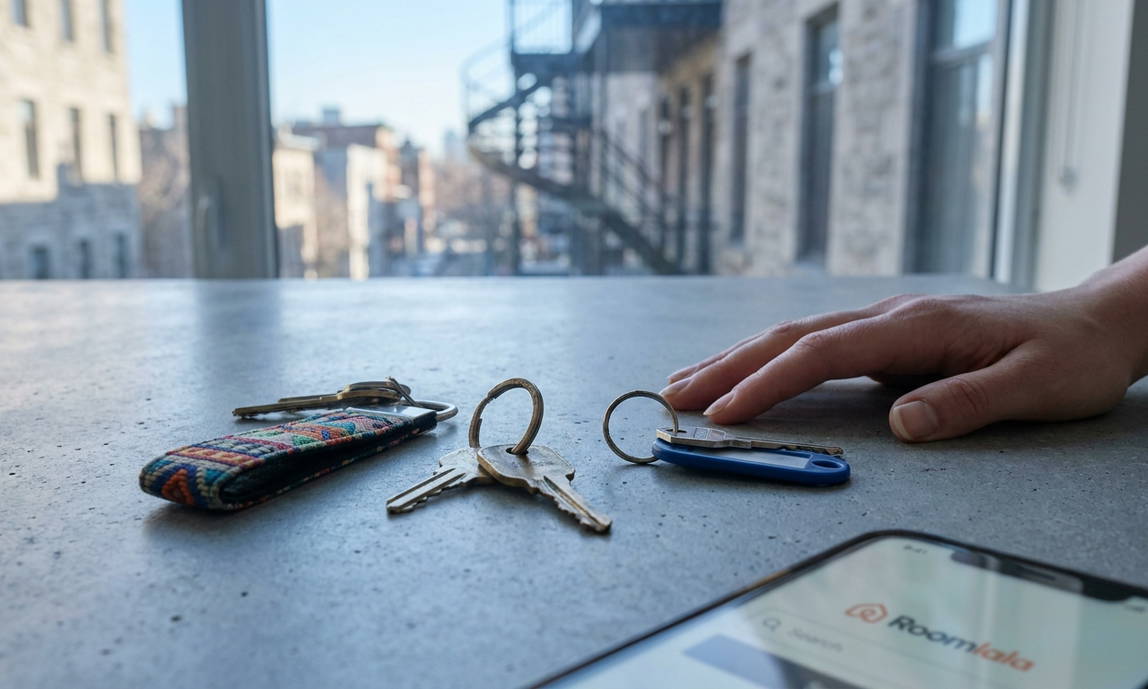
Finding housing in Quebec has always been an adventure, but for some time now, the rules of the game have changed significantly. If you are looking to assign your room or join a shared apartment, you have likely heard of the famous Quebec Law 31. Adopted and brought into force on February 21, 2024, this legislation has disrupted tenants' habits, and its effects are being fully felt in this year 2026. At Roomlala, we know how essential flexibility is for you. This is why we have decided to provide an in-depth breakdown of these new rules. Gone are the days when you could pass on your lease from one generation of students to the next without the host being able to oppose it. Today, lease assignment in 2026 follows new dynamics that are crucial to master to avoid unpleasant surprises, whether you are moving out or searching for your future sanctuary.
Understanding Quebec Law 31: What has changed for lease assignment?
For decades, lease assignment has been the preferred tool for Quebec tenants to leave a home before the end of their contract while allowing the new tenant to keep an affordable rent. However, Quebec Law 31 has reshuffled the cards. The most striking change is undoubtedly the new power granted to hosts: they can now refuse a lease assignment without having to justify a serious reason. Previously, a host had to prove that the proposed candidate was insolvent or had poor behavior to refuse the transfer. Today, a simple refusal is enough, which radically changes the situation for tenants who wish to free themselves from their obligations.
Read also: Student housing shortage in 2026: Homestay solutions as a key strategy for the new academic year, Housing crisis in Portugal: 2026 tax incentives for room rentals and Temporary rental fraud in Spain: New 2026 rules to secure long-term shared housing
But be careful, this refusal is not without consequences for the host either. The law provides a protection mechanism for the tenant: if the host refuses the assignment without a serious reason, the lease is automatically terminated on the proposed assignment date. This means that the tenant is released from their obligations without any financial penalty. It is therefore essential, when you send your notice of assignment, to include a precise and well-considered date. This date will become the official end date of your lease if the host decides to block the transfer. At Roomlala, we advise you to always send this notice by registered mail to keep an irrefutable legal proof of your action.
Despite these upheavals, some rules remain unchanged to ensure balance. The legal response period for the host remains set at 15 days after receipt of the written notice. If they do not respond within this period, the law considers the assignment accepted by default. It is therefore crucial to calculate this period carefully before committing elsewhere. Furthermore, the new legislation formally prohibits lease assignment and subletting for profit. It is now illegal to request a financial consideration to assign your lease or to sublet at a price higher than the rent you pay, thus preventing speculation at the expense of future tenants.
Let's take a concrete example to illustrate this new reality. Julien, a young professional in Quebec, wants to leave his apartment in the middle of November to be closer to his new workplace. He finds an ideal candidate, writes an assignment notice with a transfer date of December 1st, and sends it to his host. If the host refuses without a serious reason to re-rent the apartment at a higher price, Julien's lease will be officially terminated on December 1st. Julien will be able to leave with peace of mind, without paying the remaining months, but the candidate he found will, for their part, have to start their housing search from scratch.
The specific case of refusal without a serious reason
Refusal without a serious reason has become the new norm since the adoption of Law 31. Concretely, this allows the host to regain control of their property to, for example, carry out renovations or adjust the rent to the current market price. For the outgoing tenant, it is an easy and cost-free exit strategy. However, this provision creates immense uncertainty for candidates for the lease transfer, who can never be sure of obtaining the housing until the host has given explicit agreement or allowed the 15-day period to pass.
It is therefore vital for tenants to prepare their application well. Even if the host can refuse without a reason, presenting a solid and reassuring file (proof of income, good references) can dissuade them from refusing the assignment, especially if they do not wish to deal with the trouble of finding a new tenant and signing a new lease. Transparency and communication remain your best assets in this complex new legal context.
The ban on profits from assignment and subletting
Another fundamental aspect of Law 31 is the strict ban on making a profit during an assignment or subletting. Before this law, it sometimes happened that some tenants asked for a sum of money to assign a very advantageous lease, a practice commonly called lease selling. Today, this practice is heavily sanctioned. The Tribunal administratif du logement (TAL) is very clear: the assigning tenant cannot demand any sum of money exceeding the reimbursement of reasonable expenses incurred for the assignment (such as credit check fees, for example).
This measure aims to sanitize the rental market, but it also requires tenants to be scrupulously honest. If you plan to sublet your room during the summer, you can only charge the exact amount of your share of the rent, without any profit margin. At Roomlala, we ensure that the listings posted respect these principles of fairness, thus guaranteeing a healthy and legal environment for all our users.
The direct impact on shared housing in Quebec: The end of perpetual leases?
While Law 31 affects all tenants, its consequences are particularly daunting for shared housing in Quebec. Historically, shared apartments often operated with perpetual leases: when a roommate left the housing, they assigned their share of the lease to a newcomer, thus allowing the group to keep the same apartment for years, with minimal rent increases. This system, very advantageous for young people, is now seriously threatened by the right to refuse without a serious reason granted to hosts.
Indeed, in shared housing, a host's refusal of an assignment does not terminate the entire lease of the apartment, but only the lease share of the departing roommate. This is where the situation becomes critical for those who remain. If the departing tenant is released from their obligations, the remaining roommates often find themselves with a financial void to fill. According to the solidarity clauses included in the majority of joint leases, the remaining tenants could be held liable to pay the entire rent, including the share of the person who left, until the end of the current lease.
This situation gives a considerable negotiating leverage to hosts. By systematically refusing assignments in a shared home, a host can financially suffocate the remaining tenants, pushing them to terminate the lease as well. Once the apartment is completely emptied, the host is free to sign a new lease at a much higher rate. This legal change greatly weakens long-term shared housing and forces tenants to completely rethink how they organize themselves and communicate with their host.
Let's take the case of a shared home in the Rosemont neighborhood. Clara, Marc, and Sophie have been sharing a large 5-and-a-half apartment for three years. Clara decides to move out and finds a replacement. The host refuses the assignment without a reason. Clara's lease is terminated, but Marc and Sophie find themselves having to bear the total rent between the two of them, because the host refuses the addition of a new name to the current lease. To avoid this trap, Marc and Sophie have no choice but to negotiate the signing of a brand new lease with the host, including the new roommate, but inevitably accepting a rent increase. This is a brutal reality of the new tenant rights in Montreal.
Financial solidarity: a trap to avoid
The solidarity clause is the Achilles' heel of roommates under the Law 31 regime. When a lease indicates that tenants are jointly and severally liable, this means that the host can claim the entire rent from any one of them. Before signing a shared lease, it is therefore vital to check for the presence of this clause. If possible, prioritize leases where each tenant is only responsible for their own share, although hosts are generally reluctant to accept this type of contract.
In the event of a roommate's departure and an assignment refusal, immediate communication with the host is essential. You must try to reach an amicable agreement, for example by proposing to sign an annex to the lease to formally integrate the newcomer, even if it means accepting a slight rent increase, rather than ending up paying double the price for months.
Strategies to maintain your shared housing
Faced with these challenges, roommates must show ingenuity. One strategy consists of anticipating departures well before the lease renewal date. If a roommate knows they are going to leave, it is often simpler to wait for the annual renewal period to inform the host of the non-renewal of their share, and simultaneously propose the signing of a new lease including the remaining tenants and the newcomer. Although this gives the host the opportunity to increase the rent, it avoids the stress of a sudden termination during the year.
Another avenue is to prioritize temporary subletting if the roommate plans to return, but beware, subletting is also subject to the host's approval, although the reasons for refusal are different from those for assignment. It is essential to know your rights well and to be accompanied, for example by consulting the resources of the Tribunal administratif du logement (TAL).
The Quebec student lease: How to adapt to the new reality?
The student public is arguably one of the most affected by the repercussions of Law 31 on lease assignment in 2026. By nature, student life is made of mobility: internships abroad, campus changes, returning to family during the summer. The classic Quebec student lease, with a duration of one year, is often unsuited to this moving reality. Until now, lease assignment allowed students to juggle these requirements without going broke. Today, the fear of being refused an assignment and putting one's roommates in a difficult spot hinders many mobility projects.
For international students, the situation is even more delicate. Arriving in Quebec and looking for a room in shared housing has become a path strewn with pitfalls. Candidates for a lease takeover are often perceived as risks by hosts who prefer to start on a blank slate. It is therefore crucial for students to turn to more flexible and better-supported housing solutions from the start, to avoid getting stuck in a rigid contract or being the collateral victims of an assignment refusal.
Faced with this complexity, subletting is becoming a popular option again for temporary absences (like summer vacations). Unlike assignment, subletting keeps the primary tenant responsible for the lease. However, the host must always be notified and can refuse for serious reasons. It is imperative to draft a clear subletting contract and strictly respect the prohibition on making a profit. A student who sublets their furnished room can include a slight compensation for furniture wear and tear, but the total amount must never resemble a lucrative operation.
Let's take the example of Sarah, a student at Université Laval. She must leave for an internship in Montreal for four months. Instead of assigning her lease and risking a termination that would cause her roommates to lose the apartment, she opts for subletting. She notifies her host in writing, finds a reliable subtenant via a secure platform, and ensures that the requested rent corresponds exactly to her usual share. This method, although requiring rigorous management, protects the balance of her shared housing while respecting the law.
Alternative and secure solutions with Roomlala
Faced with the uncertainty generated by Quebec Law 31 and the growing complexity of lease assignment in 2026, more and more tenants and hosts are looking for simpler and less risky alternatives. This is where we come in. At Roomlala, we firmly believe that renting should not be a legal headache. We offer housing solutions that bypass the rigidity of traditional leases while providing maximum security to all parties involved.
The homestay is one of the most effective responses to this new situation. By renting a room directly from the host, you sign a specific rental contract, often for a shorter duration or adapted to the school calendar. There is no lease assignment to manage, no joint roommates to protect, and no risk of a surprise termination. The host retains control of their home, and the tenant benefits from affordable rent and great flexibility for departures and arrivals. It is a win-win solution that avoids the complexities of the Tribunal administratif du logement regarding assignments.
For those who prefer independence, medium-term rental via our platform is also an excellent alternative. Whether you are a young professional on a trial period or a student on an exchange session, Roomlala allows you to find furnished housing for durations ranging from a few weeks to several months. Our online contracts are clear, secure, and protect your payments. You no longer need to commit to a 12-month lease with the anxiety of having to find a taker if your plans change. We take care of securing the transaction so you can focus on your professional or student life.
Let's imagine the journey of Thomas, a recent graduate. Rather than getting locked into a classic lease and suffering the new constraints of tenant rights in Montreal, he chooses to book a room via Roomlala for his first six months of work. He pays his rent online in a secure manner, has no exorbitant security deposit to pay up front, and knows exactly when his contract ends. If he wishes to extend, he does so by direct agreement with his host. By avoiding the lease assignment system, Thomas gains peace of mind and freedom, proving that there are modern and secure ways to house yourself in Quebec in 2026.
- Total flexibility: Contracts adapted to the actual duration of your need, without long-term commitment.
- No complex paperwork: Forget assignment notices and 15-day waiting periods. Everything is managed simply online.
- Financial security: No risk of having to pay for failing roommates thanks to individual contracts.
- Legal compliance: Our booking models respect current standards, protecting you against bad practices.
In conclusion, although Law 31 has profoundly modified the Quebec rental landscape by making lease assignment more uncertain, there is no need to panic. By understanding your rights, anticipating your steps, and turning to secure platforms like Roomlala, you can continue to enjoy an enriching and stress-free housing experience in Quebec.




There are no comments yet.
Add a comment
You must be logged in to post a comment.