
 SEARCH
 LIST YOUR PROPERTY
Do you own one or more empty rooms in your main home, or do you own a second home that you rarely use? Beware, 2026 marks a major and particularly punitive fiscal turning point for under-occupied spaces. With the increase in local taxation, keeping unused square footage is becoming a real financial drain. At Roomlala, we assist thousands of hosts every day who are looking for solutions to optimize their budget. In this article, we will explain in detail how renting out a room, whether for a student or a young professional, not only helps offset the explosion of the 2026 housing surtax, but also generates additional income that is completely tax-free under certain conditions. Discover our comprehensive guide to transforming this fiscal constraint into a genuine financial and personal opportunity.
Understanding the 2026 housing surtax explosion and its impact on your budget
The year 2026 does not look promising for owners of second homes or under-occupied dwellings. In fact, the calculation basis for the housing tax on second homes (THRS) is subject to a flat-rate increase of at least 3.9%. This mechanical increase in the tax base significantly adds to the burden of local taxation, even before municipalities vote on their own rates. If you thought the abolition of the housing tax for primary residences would bring you permanent relief, the reality is quite different for properties considered secondary or vacant.
Read also: Cedolare Secca 2026: The tax benefits of renting a student room in Italy, New CIN regulations in Italy: Why hosts are turning to shared housing in 2026 and 2026 back-to-school season in Italy: Everything you need to know about the student rental agreement (Contratto per Studenti)
The real blow comes from the massive expansion of the so-called "tense zone" housing tax. Today, nearly 3,700 French municipalities are officially classified as tense zones. These municipalities, facing an acute housing crisis and severe difficulties in accessing rentals for permanent residents, now have the legal power to apply a dizzying surtax on the housing tax for second homes. This surcharge can fluctuate freely between 5% and 60%, depending on the municipal council's vote. The objective of public authorities is clear: to discourage under-occupation and force the return of housing to the market for local residents.
To illustrate this phenomenon, let's take a concrete example. Imagine you own a beautiful apartment in Annecy or a family home on the Basque coast, areas that are now ultra-tense. If your housing tax amounted to 1,000 euros, the 3.9% increase in the base first brings it to 1,039 euros. If the town hall decides to apply the maximum surtax of 60%, your final bill will climb to over 1,660 euros! Keeping an empty room or an unoccupied home for a large part of the year is therefore becoming a luxury that many can no longer afford. This is where a smart rental strategy is essential to neutralize this charge.
The strategic solution: transforming your empty space into a long-term rental
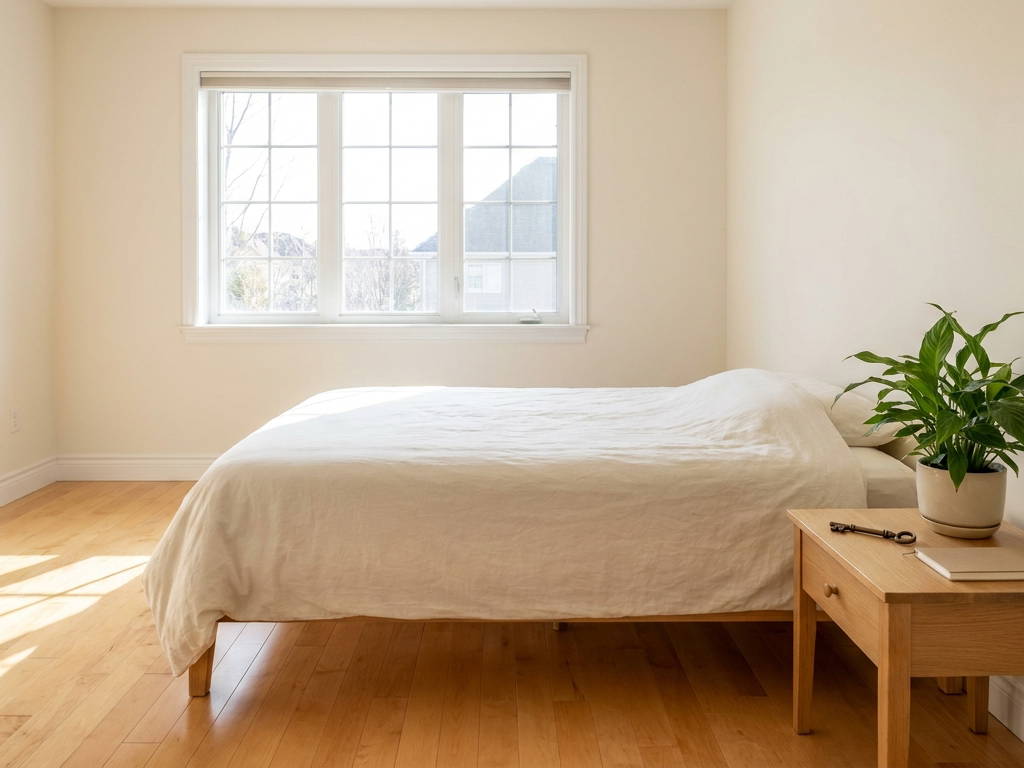
Faced with this unprecedented fiscal pressure, the most effective and socially conscious solution is to return these vacant spaces to the long-term rental market. At Roomlala, we have found that you do not need to rent out your entire home to make your property profitable. Renting out a simple furnished room in your home allows you to address the housing shortage while completely canceling or largely offsetting the housing surtax. Depending on your situation and that of your property, several lease formats are available to you to maintain a certain level of flexibility.
The landlord mobility lease: flexibility and profitability
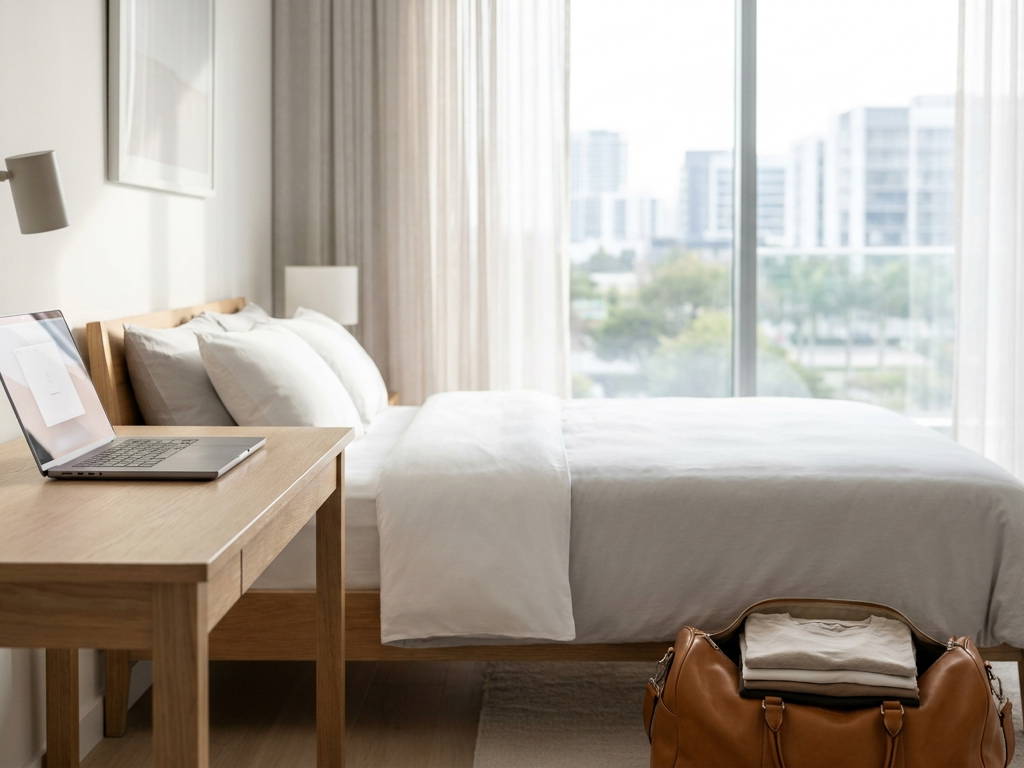
The landlord mobility lease is a recent legal invention that is increasingly attractive to hosts. It is a short-to-medium-term furnished rental contract, lasting from 1 to 10 months maximum, and is non-renewable. It is strictly reserved for tenants in a situation of temporary mobility: professional training, higher education, apprenticeship contracts, internships, or temporary work assignments. The immense advantage of this lease is its flexibility. It allows you to rent your room during the periods when you do not need it, while regaining the use of your property on a fixed date known in advance.
Let's take a very common use case at Roomlala: you own a large apartment in Bordeaux, a city subject to a strict tense zone housing tax. You can rent a room in your home to a young professional on a trial period or to a seasonal worker for a duration of 6 months via a mobility lease. You thus generate rental income that largely covers your property tax and any potential surtax, while retaining the freedom to reclaim your room to accommodate your family during the summer holidays. Furthermore, this lease does not require a security deposit, which greatly facilitates the search for tenants, who are often covered by the Visale guarantee.
The student lease: a constantly growing rental demand
If you are looking for stability over a full school year, the 9-month student lease is the ideal solution. The student housing crisis is a striking reality in all major French university metropolises. By opting for this type of rental, you provide an invaluable service to a young person in training while ensuring regular income from September to May or June. At the end of the 9 months, the lease ends automatically without you needing to give notice, which guarantees that you will regain your space for the summer season.
For example, if you live in Lyon or Rennes and your children have left the family nest, their old rooms represent untapped financial potential. By hosting a student, you not only bring your home to life, but you also create an often very enriching intergenerational bond. Financially, the rent collected over 9 months is more than enough to erase the impact of the 2026 housing surtax, transforming a cost center into a real profit center.
Renting a room in your home: the guide to being tax-exempt in 2026
One of the best-kept secrets in real estate lies in Article 35 bis of the General Tax Code (CGI). If you decide to rent out a furnished room located inside your main home, you can benefit from a total exemption from income tax on the rent received. Yes, you read that right: 100% of the income generated can be tax-free. However, the tax authorities impose strict rules that must be respected to maintain this invaluable advantage in 2026.
The first prerequisite is that the rented room must be an integral part of your main home. This means that it must not be completely independent. For example, an outbuilding at the bottom of the garden with its own entrance, its own meter, and which does not communicate with your living space will not benefit from this tax exemption. The room must be a part of your house, even if the tenant has access to a shared bathroom or kitchen. Furthermore, the room must constitute the tenant's main residence (case of the student) or their justified temporary residence (case of the mobility lease or seasonal worker).
2026 rent ceilings that must be strictly respected
To avoid abuse and guarantee affordable rents, the State sets annual rent ceilings that must not be exceeded to benefit from the tax exemption for renting a room in your home. For the year 2026, these annual ceilings excluding charges have been re-evaluated. They are set at 215 euros per square meter of living space in the Île-de-France region, and at 159 euros per square meter in other French regions. It is crucial to calculate your rent precisely so as not to cross this red line.
Here is a concrete calculation example to help you. If you rent a 15 m2 room in Paris (Île-de-France), the annual rent excluding charges must not exceed 3,225 euros (15 m2 x 215 euros), which is a maximum monthly rent of approximately 268 euros excluding charges. If this same 15 m2 room is in Toulouse (other region), the annual ceiling will be 2,385 euros (15 m2 x 159 euros), or approximately 198 euros per month excluding charges. Major point of vigilance: if you set a rent that exceeds these 2026 legal ceilings by even one euro, the tax exemption is simply canceled. All of your rental income will then become taxable, generally under the micro-BIC regime (with a 50% deduction) or the actual regime. At Roomlala, we advise you to carefully adjust your rent to take advantage of this highly beneficial tax break.
Procedures, standards, and safety: what to know before getting started
While renting a room in your primary residence is relatively simple from an administrative point of view, transforming an entire second home or a part of it into a long-term rental requires some precautions. In many cities located in tense zones, changing the use of a property (going from a second home to a tourist furnished rental or to a specific long-term rental) may require a prior declaration at the town hall. It is essential to contact the urban planning department of your municipality to ensure that your procedure is in perfect compliance with the local urban plan (PLU).
Furthermore, regulations on energy performance have tightened considerably. To put a property on the long-term rental market, even if it is a room in a host's home, the accommodation must meet decency standards for energy. The Energy Performance Diagnosis (DPE) of your home must not classify it as a thermal sieve (letters G, and soon F and E according to the government schedule). Ensure that your home is well insulated and properly heated before signing a lease, otherwise the contract may be rendered null and void, or you may be subject to sanctions.
Finally, embarking on room rental can raise legitimate concerns. This is precisely why Roomlala exists. We provide you with a secure platform to publish your listing, verify the profiles of your future tenants, and manage payments with complete peace of mind. We also provide you with lease templates that comply with 2026 legislation, whether it is a student lease or a mobility lease. For example, Marie, a Roomlala host in Montpellier, was able to rent out the room of her son who went abroad in just a few clicks. Thanks to our secure messaging system, she selected a trusted young doctoral student, signed a digital student lease, and now receives tax-free rent that allows her to calmly finance the renovation work on her house, far from the hassles of the housing surtax.
There are no comments yet.
Add a comment
You must be logged in to post a comment.