
 SEARCH
 LIST YOUR PROPERTY
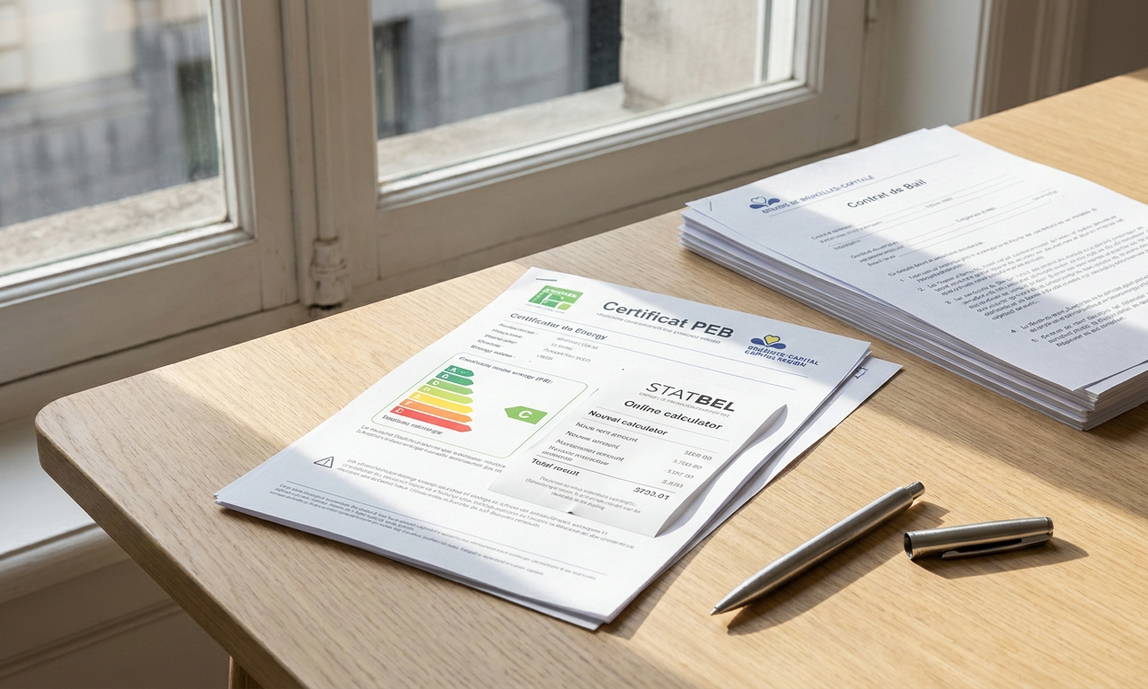
Inflation and energy costs have profoundly disrupted the Belgian real estate market in recent years. If you are a host or a tenant in the capital, you are undoubtedly asking yourself specific questions about the rent indexation in Brussels 2026. Between former rent freezes, energy performance certificates (EPC), and the specificities of shared housing, it is very easy to get lost. At Roomlala, we know how crucial it is to rent with peace of mind and in compliance with the law. Whether you offer a homestay or are looking to rent a room long-term, understanding the Brussels lease legislation is essential today. In this comprehensive article, we break down the legal rules applicable in 2026 for indexing a rent, with a particular focus on the EPC for shared housing in Belgium. Prepare to become an expert on the subject and manage your rentals without any stress!
The 3 golden rules for rent indexation in Brussels 2026
The written and registered lease: an essential formality
To be able to index a rent in 2026, the very first condition required by the Brussels-Capital Region is the existence of a written lease agreement. Verbal agreements, although they may have existed in the past, offer you no solid legal protection and prohibit any rent revision. Brussels law requires a clear document, dated and signed by all parties involved. At Roomlala, we make it a point of honor to secure your procedures by reminding you of the importance of this fundamental document.
Read also: Rental security deposit in Flanders 2026: New rules for long-term room rentals, Rise in rental utility costs in Switzerland (Winter 2026): Renting out a room to balance your budget and Student housing shortage in Belgium in 2026: Homestay, the supportive alternative
Furthermore, this written lease must be registered with the Legal Certainty office (SPF Finances). This registration is a completely free process if it is carried out within two months of the contract being signed. If you exceed this period, a fine may be claimed from you. An unregistered lease simply deprives the host of their right to indexation, even if all other conditions are met.
Let's take a concrete example: you have been renting a room in your home to a student for a year. If you have never taken the trouble to register the lease on the government's MyRent platform, you will not be able to apply the indexation on the anniversary date. It is therefore essential to regularize the situation as soon as possible to protect your rights as a host.
The EPC certificate: the obligation often forgotten in shared housing
The second condition, and not the least, concerns the well-known Energy Performance Certificate (EPC). To index the rent, a valid EPC certificate must have been communicated to the tenant, ideally upon signing the lease. This is a major point of attention, as many hosts renting out a single room often omit this step, thinking it only applies to entire homes.
However, the Brussels lease legislation is very clear: any rental intended for a primary residence is concerned. Without providing a valid EPC certificate to the tenant, indexation is strictly prohibited. If you are renting a room in your own home, it is generally the global EPC of the house that serves as proof and which must be annexed to the shared housing or homestay contract.
At Roomlala, we note that this oversight is the primary cause of disputes during indexation. For example, if a host requests a rent increase but the tenant has never seen the EPC, the latter is within their rights to refuse the increase outright. Therefore, ensure you have this document up to date (it is valid for 10 years) and provide a copy to your tenant.
The written request: indexation is not automatic
Many hosts are unaware of this, but in Brussels, rent indexation is never automatic. Even if the anniversary date of the lease has passed, the rent does not adjust itself. The host must mandatorily request it in writing from the tenant. This rule applies to all types of leases, including for a homestay or shared housing.
This written request can take the form of a registered letter, an email (if the parties have agreed to communicate electronically in the lease), or a letter delivered by hand against a signature. The notification must clearly indicate the new rent amount and the date from which it is payable.
Imagine your lease began on March 1st. On March 1st of the following year, it is up to you, the host, to take the initiative to send a message to your tenant to inform them of the new calculation. If you do not say anything, the tenant will legitimately continue to pay the old rent. At Roomlala, we advise you to set an annual reminder so you do not miss this crucial step.
The impact of the EPC on the calculation: No more freezing, time for the correction factor
The end of the strict cap for energy-inefficient housing
Remember: in the midst of the energy crisis, the Brussels government had decided to freeze or cap rent indexation for housing considered to be energy-inefficient (EPC E, F, or G). This exceptional measure aimed to protect tenants against the double burden of inflation and exorbitant energy bills. However, it is essential to note that this strict freeze has been over since October 2023.
Today, in 2026, it is possible to index the rents of poorly insulated housing again. This news is often welcomed with relief by hosts who have seen their own costs increase without being able to adjust their rental income. However, this resumption of indexation does not happen just any way for older contracts.
The transition was designed to avoid a financial shock that was too violent for tenants. While the classic calculation formula is based on the health index (base rent x new health index / starting health index), a significant subtlety is added if your housing is not top-of-the-class in terms of energy efficiency. This is where the concept of the correction factor comes into play.
The well-known correction factor for leases prior to mid-October 2022
For rent indexation in Brussels 2026, a specific mechanism, called the 'correction factor', remains applicable. It concerns exclusively housing with an EPC class of E, F, or G whose lease contract began before October 14, 2022. The region's objective is to avoid a sudden rise in rent that would make up for the inflation of the frozen years all at once.
Using the classic formula alone is illegal for these specific leases. The application of the Brussels correction factor is mandatory. Concretely, this factor smooths out the increase. The calculation becomes a bit more complex, which is why Brussels authorities strongly recommend using the official rent calculator provided by Statbel.
Let's take a use case: you have been renting a room since September 1, 2021, in an apartment with an EPC of F. In September 2026, you wish to index the rent. You cannot simply multiply the base rent by the new 2026 index. You will have to apply the formula incorporating the correction factor that neutralizes the period of exceptional inflation of 2022-2023. If you make a mistake, the tenant will be able to demand a refund of the overpayment.
Shared housing and homestays: What changes for the Brussels lease legislation
Renting a room long-term: same rules as for the entire home
When approaching the subject of shared accommodation, a persistent misconception suggests that renting a single room escapes the strict rules of the classic real estate market. This is false. If you decide to rent a room long-term and the tenant establishes their primary residence there, you fall under the scope of the housing lease legislation of the Brussels-Capital Region.
This means that all the indexation rules mentioned above apply to the letter. You cannot arbitrarily decide to increase the rent by 50 euros on the pretext that your expenses have increased, without respecting the health index formula and the conditions related to the EPC. At Roomlala, we ensure our community is informed so that the sharing economy remains fair and legal.
Whether you have a joint shared housing contract (several tenants on a single lease) or individual leases for each room, rigor is required. Indexation is calculated on the base rent excluding charges. Fixed or provisional charges are subject to a separate statement and are not subject to the same indexation formula.
EPC for shared housing in Belgium: how does it work in practice?
The question of the EPC for shared housing in Belgium often raises questions. How do you evaluate the energy performance of a single room? In reality, Brussels law is pragmatic: it is the EPC certificate of the overall housing unit that serves as proof. If you rent three rooms in a single-family house, it is the EPC of the entire house that must be communicated to each roommate.
If you are the owner of a large apartment divided for shared housing, you therefore only need one EPC certificate for the entire apartment. This score (from A to G) will determine whether or not you are subject to the correction factor when indexing the rents of your roommates (for leases signed before October 2022).
It is important to note that if you undertake energy renovation work (insulation, changing the boiler, double glazing) while your tenants occupy the premises, it is in your best interest to have a new EPC certificate produced. A better score will allow you to exit the restrictions related to classes E, F, and G, thus adding value to your property while offering more comfort to your tenants.
Common errors and practical tips for hosts and tenants
Retroactivity limited to 3 months
One of the most frequent errors we observe among hosts is forgetting the lease anniversary date. What happens if you realize in June that you should have indexed the rent in January? Can you claim the arrears since the beginning of the year? The answer is no, not in its entirety.
The law provides for retroactivity strictly limited to 3 months. In the event of an oversight, the host can only claim indexation for the 3 months preceding their written request, in addition to the current month. This rule aims to protect the tenant against sudden and unforeseen debts that could accumulate over several years.
Concrete example: the anniversary date of your lease is February 1st. You forget and send your written indexation request on July 15th. You will be able to apply the new rent for the future, and you can only claim arrears for the months of April, May, and June (the 3 months preceding July). The months of February and March are definitively lost for you. Good calendar management is therefore essential!
How to calculate indexation without making a mistake?
Manual calculation of indexation can quickly become a headache, especially with the introduction of the correction factor for poor EPCs. A calculation error in your favor could be challenged by the tenant, and an error to your disadvantage would make you lose money. To avoid this, the safest method is to use the official tools.
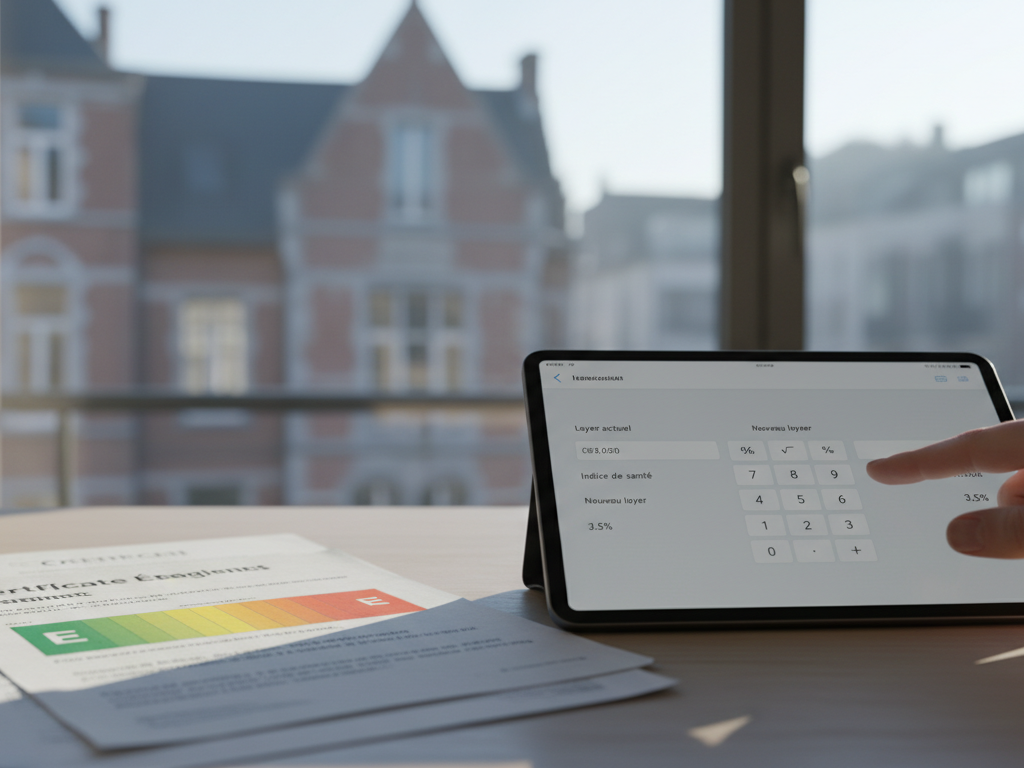
We recommend you systematically use the online rent calculator from Statbel, the Belgian statistical office. This free tool takes into account all regional subtleties, including the date of signing the lease, the region (Brussels-Capital), and the EPC score. You just need to enter your contract data to obtain the exact and legal amount down to the cent.
- Step 1: Gather your lease (date of signature, effective date, base rent excluding charges).
- Step 2: Check the score of your EPC certificate.
- Step 3: Go to the Statbel website and fill out the form.
- Step 4: Attach the PDF result generated by Statbel to the indexation request letter sent to your tenant for total transparency.
Safety and support with Roomlala
At Roomlala, our mission is to facilitate the connection between hosts and tenants, while ensuring a secure framework for everyone. We know that the Brussels lease legislation can seem complex, but it is there to balance the rights and duties of everyone. Renting a room in your home or finding shared housing should never be a source of legal anxiety.
By using our platform for your medium and long-term rentals, you benefit from a trusted community. We always encourage our users to sign clear contracts, respect regional standards like the EPC, and communicate openly. A tenant well-informed about how their rent is calculated will always be more inclined to accept a justified and legal indexation.
Do not hesitate to browse our other guides to optimize your rental experience. Whether you are a student looking for an affordable room or a host wishing to monetize an unoccupied space, Roomlala remains your partner of choice to navigate the world of peer-to-peer rentals in Belgium with peace of mind.






There are no comments yet.
Add a comment
You must be logged in to post a comment.