
 SEARCH
 LIST YOUR PROPERTY
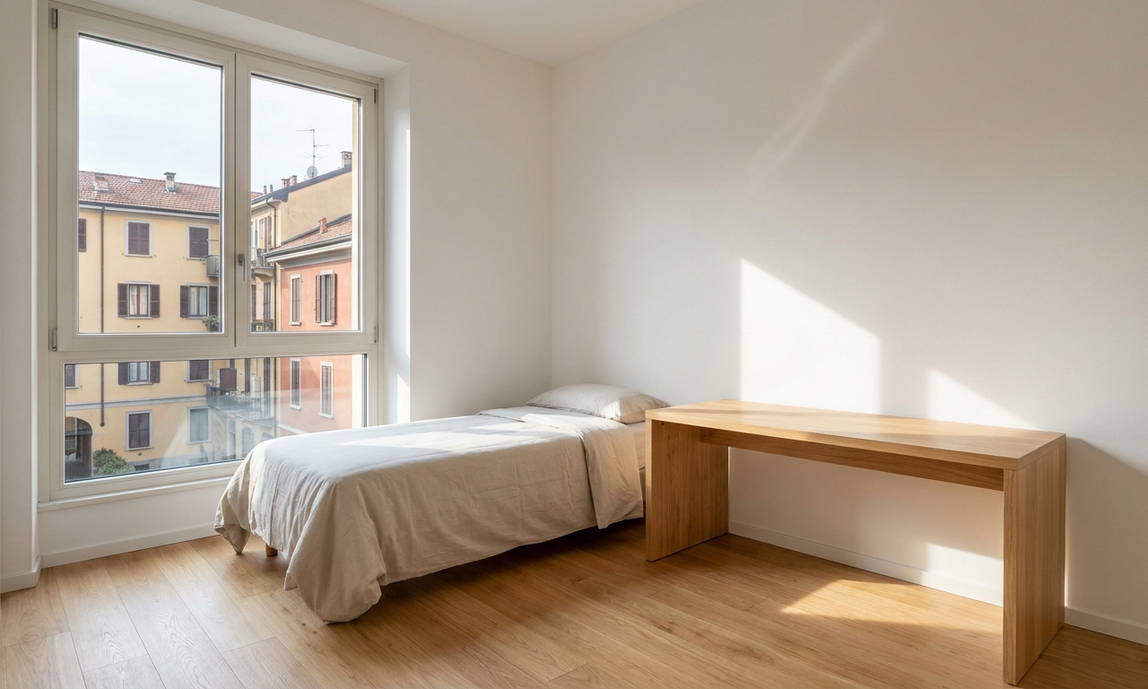
If you are a host in Milan in 2026, you have likely noticed a radical change in the local real estate landscape. As the Lombard capital prepares to buzz with the rhythm of the Winter Olympics, the tourist excitement masks a far more complex reality for short-term rental hosts. Once considered the golden goose, the short-term rental model popularized by Airbnb is now showing its limits in the face of an increasingly dissuasive legislative and fiscal arsenal.
At Roomlala, we support thousands of hosts in managing their properties on a daily basis. Today, we are observing a fundamental trend: a strong return to long-term rentals, particularly student housing. Given the accumulation of administrative constraints and skyrocketing taxes, renting to a student is no longer just a supportive choice; it has become the most profitable and secure financial strategy in Italy. Let's decode this transformation of the Milanese real estate market.
Read also: Student housing crisis in Belgium: Why a homestay is the solution for the 2026 back-to-school season, 2026 student housing EPC: Everything you need to know about the new rental rules in Belgium and 2026 rent control: Why homestays provide security for students
The end of the golden age for short-term rentals in Milan in 2026
Increasingly heavy taxation for hosts
The year 2026 marks a decisive turning point in Italian tax policy regarding short-term rentals. Historically, the cedolare secca (flat-rate tax) regime offered a highly advantageous single rate for tourist rentals. Today, the situation has changed. The government has implemented a progressive taxation system designed to curb real estate speculation. From now on, if you rent out a first property for a short term, the cedolare secca remains at 21%. But from the second property onwards, this rate inevitably climbs to 26%.
The real fiscal blow, however, comes starting with the third property. Until recently, a host could manage up to five apartments as short-term rentals as an individual. In 2026, the Finance Act drastically lowered this threshold: starting with the third property rented out on a short-term basis, the activity is automatically reclassified as a commercial business. This implies the obligation to open a Partita IVA (VAT number), maintain corporate accounting, and pay social security contributions (INPS), which eliminates profitability for the majority of small investors.
This increased tax pressure aims to rebalance the rental market, which is particularly strained in large metropolises. In Milan, although the municipality has not formally banned the creation of new short-term tourist rentals in its historic center (unlike the city of Florence, which took radical measures), the vice is tightening through taxation. For many Milanese hosts, the calculation is quick: the net yield of short-term rentals is melting away in the face of these new levies.
The weight of new European and local administrative constraints
Beyond taxation, it is the administrative labyrinth that is now discouraging hosts. The strict obligation to display the National Identification Code (CIN) on all booking platforms is now being closely monitored. The absence of this famous CIN on a listing exposes the host to massive fines, ranging from 800 to 8,000 euros. Furthermore, obtaining and maintaining this code requires compliance with strict safety standards (carbon monoxide detectors, fire extinguishers), adding significant installation and maintenance costs.
Transparency has also become the absolute norm at the European level. Since May 20, 2026, the European Regulation 2024/1028 is fully applicable. This directive requires all rental platforms (Airbnb, Booking, etc.) to automatically and monthly share income and identity data of hosts with the Italian tax authorities (Agenzia delle Entrate). The era of the shadow economy or under-reporting is definitely over, as cross-checks are now managed by infallible algorithms.
Finally, the local Milanese context is increasing the bill for travelers, mechanically reducing the attractiveness of short-term rentals. Due to the organization of the Winter Olympics, the city of Milan has significantly increased the tourist tax, which can now reach 9.50 euros per night per person for tourist rentals. This dizzying rise is pushing many travelers to turn to traditional hotels or outlying municipalities, leading to a decline in occupancy rates for intra-muros Milanese hosts.
Student housing: The safe haven for Milanese hosts
The 10% "Cedolare Secca": An unbeatable tax advantage
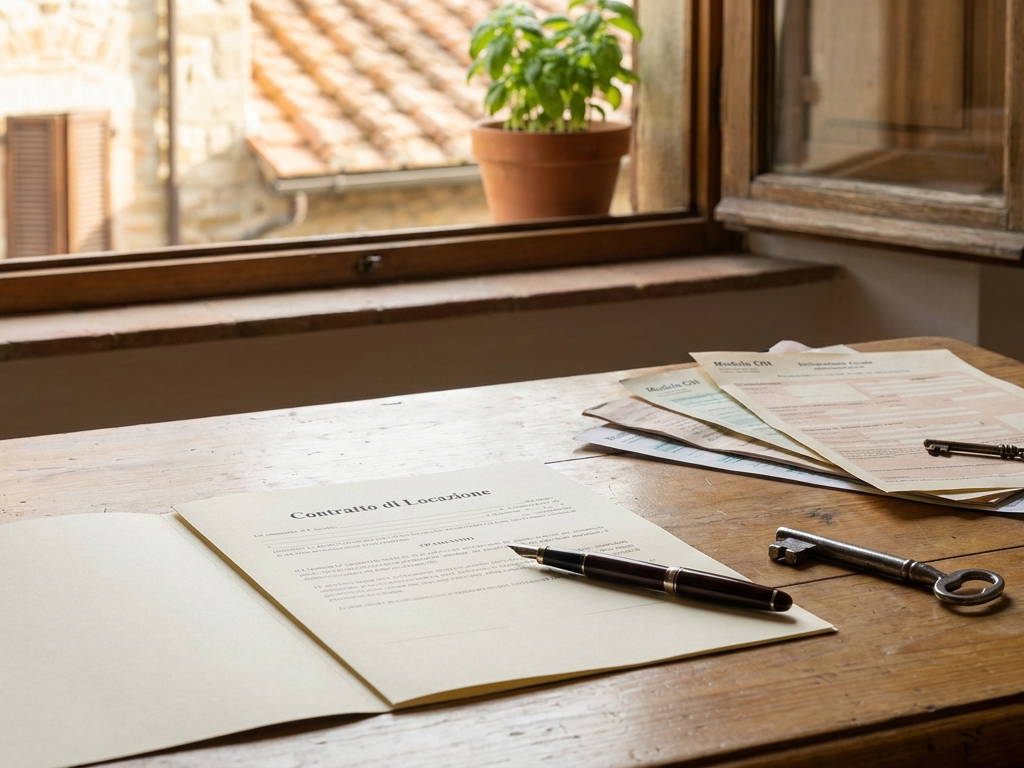
Faced with this obstacle course, the student lease (contratto per studenti universitari) appears as an oasis of tranquility and profitability. Designed for durations ranging from 6 to 36 months, this type of contract benefits in 2026 from massive fiscal support from the Italian state. The most spectacular advantage is undoubtedly the application of a cedolare secca reduced to just 10% (compared to 21% or 26% for tourism). This exceptionally low rate allows the host to keep a much larger share of their gross rental income.
However, we would like to point out a crucial point of caution: to benefit from this 10% rate, it is imperative to apply a regulated rent, known as canone concordato. This rent is not set freely by the host but is calculated according to precise scales defined by the territorial agreements of the city of Milan (based on surface area, neighborhood, floor, presence of an elevator, etc.). Although the stated rent is slightly lower than the free market price, the tax savings more than compensate for this gap.
Moreover, signing a student lease offers unparalleled financial predictability. No more stress from last-minute cancellations, winter lulls, or the time-consuming management of check-ins/check-outs. The host secures a fixed and regular income throughout the academic year, while preserving their property from premature wear and tear linked to the incessant rotation of tourists.
Reduction of IMU and advantages for tenants
Tax incentives do not stop at income tax. By opting for a student lease with regulated rent, Milanese hosts also benefit from an automatic 25% reduction on their local property tax, the IMU (Imposta Municipale Propria). In a city where cadastral values are among the highest in Italy, this discount represents an annual saving of several hundred, or even thousands of euros, further boosting the net yield of the operation.
On the demand side, the market is more dynamic than ever. Milan remains the university capital of Italy, attracting tens of thousands of students each year (Politecnico, Bocconi, Statale, etc.). In 2026, the government strengthened aid for these young people: student tenants now benefit from a 19% tax deduction on their rent (capped at about 500 euros per year). This measure has a direct effect for you, the hosts: students are extremely eager for legal and registered contracts to be able to benefit from this aid.
This synergy of interests creates an extremely healthy rental environment. Students and their guarantors (often parents) seek stability and are ready to commit seriously, while hosts find reliable, solvent tenants supported by tax incentive schemes. It is a win-win relationship that secures your real estate assets.
Concrete comparison: Tourist rental vs. Student lease in Milan
To fully understand the impact of these reforms, let's take a concrete example. Imagine Marco, the owner of two charming one-bedroom apartments in the popular Città Studi district, a stone's throw from the Politecnico. Until 2025, Marco rented out both his properties on Airbnb. In 2026, reality caught up with him. On his second apartment, rented for 1,500 € gross per month on average, he now has to pay 26% cedolare secca (i.e., 390 € in monthly taxes). Added to this are cleaning costs, the platform commission (about 15%), and rising vacancy rates due to the 9.50 € tourist tax that drives away budget travelers.
Marco's net yield on this second property falls painfully to 750 € per month, without counting the time spent answering messages, managing key exchanges, and ensuring his CIN compliance. Exhausted by this quasi-hotel management and frightened by the automatic data sharing of the EU directive 2024/1028, Marco decides to change strategy and rent to students.
By switching to the student lease with canone concordato, Marco's gross rent is capped at 1,100 € per month. At first glance, it's a loss. But let's look closer: his tax (cedolare secca) drops to 10%, i.e., only 110 €. He no longer has cleaning fees, no more astronomical recurring commissions, and benefits from a 25% reduction on his annual IMU. His monthly net income rises back to nearly 990 €, in a completely passive and legal way.
Beyond the purely accounting aspect, the gain in quality of life is invaluable. Marco no longer has to worry about customer reviews, washing sheets, or neighborhood complaints about noise pollution. He has signed a 12-month contract with two engineering students, whose parents have acted as guarantors. His property is respected, his income is guaranteed, and he is in perfect compliance with the Agenzia delle Entrate.
How to successfully transition to long-term renting with Roomlala?
At Roomlala, we are convinced that homestays and renting rooms to students represent the future of urban real estate. If you wish to take the plunge and leave behind the hassles of tourist renting, the first step is to inform yourself about the canone concordato scales applicable to your Milanese neighborhood. Host associations (such as UPPI or Confedilizia) can assist you in the exact calculation of the authorized rent to benefit from the 10% taxation.
Next, it's about finding the ideal tenant. This is where our platform comes in. Unlike traditional classified ad sites, Roomlala allows you to specifically target a student audience. You can view profiles, exchange with candidates and their parents, and verify their guarantees before even organizing a visit. Our matchmaking system secures your process and saves you precious time.
Don't forget that you can also opt to rent a room in your own home (homestay). If you have a free room in your primary residence in Milan, renting it to a student via a transitional lease is an excellent way to generate tax-free supplementary income while creating social bonds. The 10% cedolare secca rules also apply to room rentals, provided that local scales are respected.
In summary, the year 2026 signals a return to common sense in the Milanese real estate market. The new regulations should not be seen as a punishment, but as an opportunity to reorganize your assets for more stability and net profitability. By choosing the student lease, you are actively participating in solving the housing crisis for young people, while intelligently protecting your financial interests. Do not wait any longer to publish your listing on Roomlala and find your future tenants for the start of the academic year!



There are no comments yet.
Add a comment
You must be logged in to post a comment.