
 SEARCH
 LIST YOUR PROPERTY
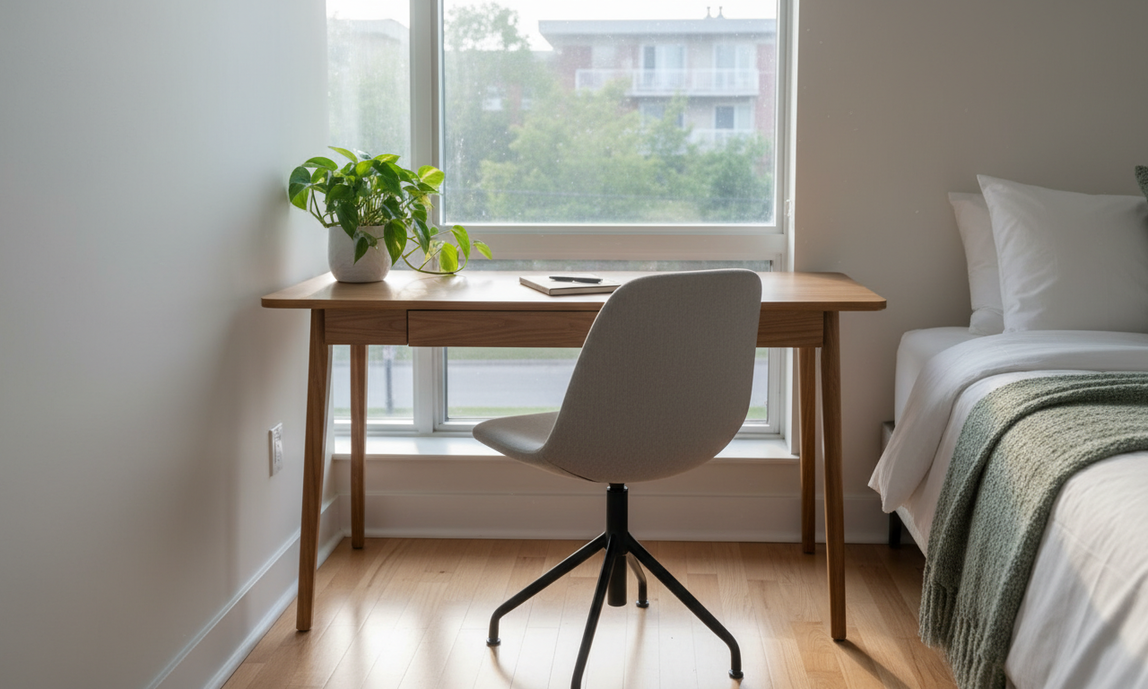
The student housing market in Canada is undergoing a historic period of change this spring 2026. Faced with the housing crisis that has shaken the country in recent years, the federal government has implemented drastic measures to regulate the influx of international students. But in practical terms, how are these restrictions reshaping the landscape of room rentals and homestays?
At Roomlala, we are closely monitoring these developments to best support you, whether you are searching for the ideal room or looking to rent out a room in your home. The dramatic drop in the number of student visas is reshuffling the cards for both tenants and hosts.
Read also: Youth Rental Voucher fall 2026: How to fund your shared housing in Spain, Porta 65 Jovem program in 2026: How to finance your room in a shared housing in Portugal and Parcoursup 2026: Why secure your student shared housing as early as June?
In this article, we break down for you the direct consequences of this visa cap on the supply, demand, and prices of shared housing in major Canadian university cities. Prepare to discover a rental market that, for the first time in a long while, is finally beginning to breathe.
Understanding the 2026 student visa cap
Key figures and the historic drop in demand
Since the successive announcements by Immigration, Refugees and Citizenship Canada (IRCC), the Canadian university and real estate landscape has undergone a radical transformation. For the year 2026, the federal government has officially set the cap for study permits at 408,000, of which only 155,000 are allocated to new arrivals. This decision marks a significant 7% decrease compared to 2025, and a 16% drop when compared to the peaks reached in 2024. At Roomlala, we see that this restriction is not just a line item in a government budget: it is entirely redrawing the map of student rental demand across the country.
The impact on the total volume of students present in the country is striking. While Canada had more than one million study permit holders at the beginning of 2024, this figure collapsed to reach approximately 460,000 in January 2026. Mechanically, this disappearance of more than half a million potential tenants has created a sudden void in neighborhoods historically popular with international students. Endless waiting lists for a simple room in a shared housing unit are now a thing of the past in many metropolitan areas.
It is crucial to understand that this drop in demand is not uniform. The provinces of Ontario and British Columbia, which hosted the vast majority of these students, are the first to be affected by this exodus. In Toronto or Vancouver, hosts who rented exclusively to undergraduate international students are seeing their listings stay online much longer. We advise you to take this new geopolitical and economic reality into account to adjust your expectations, whether you are looking for a roof over your head or a tenant.
Let us take a concrete example: a host in Burnaby (British Columbia) who easily rented their three rooms to Simon Fraser University students in less than 48 hours in 2023 must now anticipate a rental vacancy of several weeks if they do not lower their rent or improve their amenities. This use case perfectly illustrates the rebalancing of forces in the market.
The strategic exemption for graduate studies
Amid these severe restrictions, a major nuance has been introduced by the government that changes the game for the shared housing market: since January 1, 2026, students enrolled in master's and doctoral programs at public institutions are totally exempt from the cap. Furthermore, they no longer need to provide the famous provincial attestation letter (PAL). This exemption aims to retain highly qualified talent and researchers, who are considered essential to Canadian innovation.
For the homestay market, this exception is excellent news, as it changes the typical profile of the candidate for shared housing. Graduate students are generally older, often in their late twenties or thirties. They are looking for a different living environment than first-year students: less partying, more quiet, and an environment conducive to writing theses or dissertations. At Roomlala, we have noticed a 30% increase in searches including the keyword 'quiet' or 'desk' since the beginning of the year.
This evolution of the target audience requires an adaptation on the part of hosts. If you are offering a room in a shared house, highlighting the tranquility of the neighborhood, the presence of a dedicated workspace, or a fiber-optic internet connection becomes a much more powerful selling point than proximity to student bars. This is a golden opportunity for hosts who want to rent out a room in a serene environment.
Let us imagine the use case of Clara, a French doctoral student arriving at the University of Montreal in March 2026. Exempt from the visa cap, she has a slightly higher budget thanks to her research grants, but she is uncompromising about the quality of her sleep and the possibility of working remotely. By adapting their listing to target this specific profile, a Montreal host was able to secure a long-term lease with Clara, guaranteeing stable income and a harmonious cohabitation.
A shared housing market that is finally breathing: Drop in demand and rise in supply
The vacancy rate is rising according to CMHC
Recent data published by the Canada Mortgage and Housing Corporation (CMHC) in its 2025-2026 report confirm what we were feeling on the ground: the market is loosening up. At the end of 2025, the national vacancy rate for rental units rose back to 3.1%. This is a long-awaited breath of fresh air after years where this rate stagnated dangerously below the 1.5% mark, plunging many tenants into precariousness and emergency.
However, at Roomlala, we would like to highlight a shared causality. The market loosening is not solely explained by the collapse in the number of foreign students linked to the visa cap. It is also the result of a record level of new rental units delivered between 2025 and 2026. Real estate projects launched three or four years ago, in the midst of a shortage, are now arriving on the market, creating an abundant supply at the very moment student demand is falling.
This conjunction of factors creates a scissor effect favorable to tenants. More rooms available and fewer applicants mean the end of abusive bidding wars. However, one must remain vigilant regarding regional disparities. While peripheral areas and university suburbs are breathing, highly central neighborhoods, like downtown Toronto or the Plateau-Mont-Royal in Montreal, remain under tension. The demand from young workers and tech professionals continues to maintain strong rental pressure there.
Take the example of a newly inaugurated coliving complex in Kitchener (Ontario). Initially designed to house hundreds of international students, the building is facing the decline in visas. To fill its rooms, the manager had to open its doors to local young workers and adjust its rates, thus offering new affordable shared housing opportunities for the local population, a use case unthinkable just two years ago.
A marked drop in rents around major campuses
One of the most visible and pleasing consequences for the remaining students is the drop in rents in the immediate vicinity of major Canadian campuses. According to cross-referenced data from Rentals.ca and CMHC reports, rents for shared housing rooms located within a three-kilometer radius of universities in Ontario, British Columbia, and Nova Scotia are recording much sharper drops than global urban averages.
This price correction was expected. For years, the proximity premium demanded by hosts near campuses was exorbitant. Today, with the disappearance of hundreds of thousands of international tenants, hosts must align with the economic reality of Canadian students and the few remaining international students. We are seeing rent drops ranging from 10 to 15% on some private room listings in cities like Halifax or London (Ontario).
This new situation offers unprecedented bargaining power to housemates. It is no longer rare to see tenants ask for and obtain rent reductions when renewing their lease, or to demand that utilities (electricity, internet) be included in the advertised price. This is the ideal time to assert your rights and look for the best value for money.
Here is a concrete example: Julien, a student at McMaster University in Hamilton, paid $950 for a small, poorly insulated room in 2024. In May 2026, noticing that three similar rooms are empty on his street and listed at $800, he contacted his host via Roomlala. Result? His rent was lowered to $820 with the addition of a new desk provided by the host to keep him. A direct victory linked to the visa cap.
What are the consequences for tenants looking for shared housing?
For you, the tenants, the year 2026 marks the end of the uphill struggle. The shift in the balance of power gives you back the power to choose. You no longer have to accept the first unhygienic room you find for fear of ending up on the street. At Roomlala, we strongly encourage you to take your time, visit several homes, and compare offers. The competition between hosts now works in your favor.
This is also the ideal time to be demanding about rental conditions. Here are a few items that you can now negotiate more easily:
- The inclusion of utilities (water, electricity, heating) in the base rent.
- Lease flexibility (possibility to rent for 8 months instead of 12).
- Fresh paint or the purchase of new furniture before your move-in.
- Access to additional storage space or parking at no extra cost.
However, even if the market is more lenient, caution remains necessary regarding scams. With the increase in listings, fake ads continue to circulate, particularly targeting students who are searching from abroad. This is where the expertise of Roomlala comes in: our platform verifies host profiles and secures your payments. We hold your booking amount until you arrive on-site, guaranteeing you a risk-free transaction.
A frequent use case in 2026: Sarah, a student at Université Laval in Quebec City, used Roomlala to find her shared housing. Faced with three attractive offers, she was able to use the secure messaging system to negotiate with the hosts. She eventually opted for a room where the host agreed to remove the excessive security deposit (illegal in Quebec, let us remember) and provide her with a new double bed, proving that informed tenants now have all the cards in their hands.
Hosts and owners: How to adapt your offer in 2026?
Targeting graduate students and young professionals
If you are a host, the drop in the number of student visas should not be seen as a fatality, but as an invitation to move upmarket and diversify your target. As we have seen, master's and doctoral students are exempt from quotas. These profiles represent a choice clientele: mature, solvent thanks to their grants or assistant jobs, and respectful of the premises.
To attract this new target, your listing must reflect their specific needs. Forget marketing focused on festive student life. Highlight the assets of your accommodation for remote work or intensive study. At Roomlala, we advise our hosts to review the title and description of their listings. Use keywords like 'ideal for doctoral student', 'quiet environment', 'close to transport', or 'ergonomic desk included'.
Also, do not overlook young professionals. With a vacancy rate that remains low in the hyper-centers, many young professionals are looking for shared housing in the suburbs to save money. They often share the same expectations as graduate students regarding tranquility and comfort.
Take the example of Marc, who owns a large apartment near the University of Alberta in Edmonton. Seeing his inquiries drop in early 2026, he transformed an underutilized playroom into a shared coworking space for his housemates. By modifying his listing on Roomlala to explicitly target postdoctoral researchers and young health workers, he filled his rooms in less than a week with tenants ready to sign long-term leases.
Standing out in the face of increased competition
In a market where the supply of rooms is increasing, the quality of your accommodation will make all the difference. Gone are the days when a simple mattress on the floor would find a taker. Today, to maintain your rental income and avoid vacancies, you must invest in your tenants' experience. Home staging and equipping the room have become essential steps.
Here are our practical tips to make your Roomlala listing stand out:
- Improve the bedding: A good mattress is the most profitable investment. Mention it in your listing.
- Take care of the decor: A fresh coat of paint, some plants, and warm lighting make a room irresistible in photos.
- Offer included services: High-speed Wi-Fi is essential. Including a bi-monthly cleaning service for common areas can justify a slightly higher rent and avoid conflicts between housemates.
- Be flexible: Offer leases adapted to university semesters or more flexible cancellation policies.
Do not forget that the human aspect is the heart of the Roomlala DNA. Tenants are looking for more than just a roof; they are looking for a home. A welcoming host who knows their city well and is available will obtain excellent reviews. These reviews are your best weapon to reassure future candidates and maintain the attractiveness of your home despite the student visa cap.
One final inspiring use case: Sophie, a host in Ottawa, decided to offer a 'welcome pack' to her new housemates (loaded transit card, neighborhood guide, basket of local products). This minimal investment earned her 5-star ratings on Roomlala. Result: despite the 16% drop in international students in her city in 2026, her spare room has not been empty a single day, proving that quality and hospitality always triumph over market fluctuations.






There are no comments yet.
Add a comment
You must be logged in to post a comment.