
 SEARCH
 LIST YOUR PROPERTY
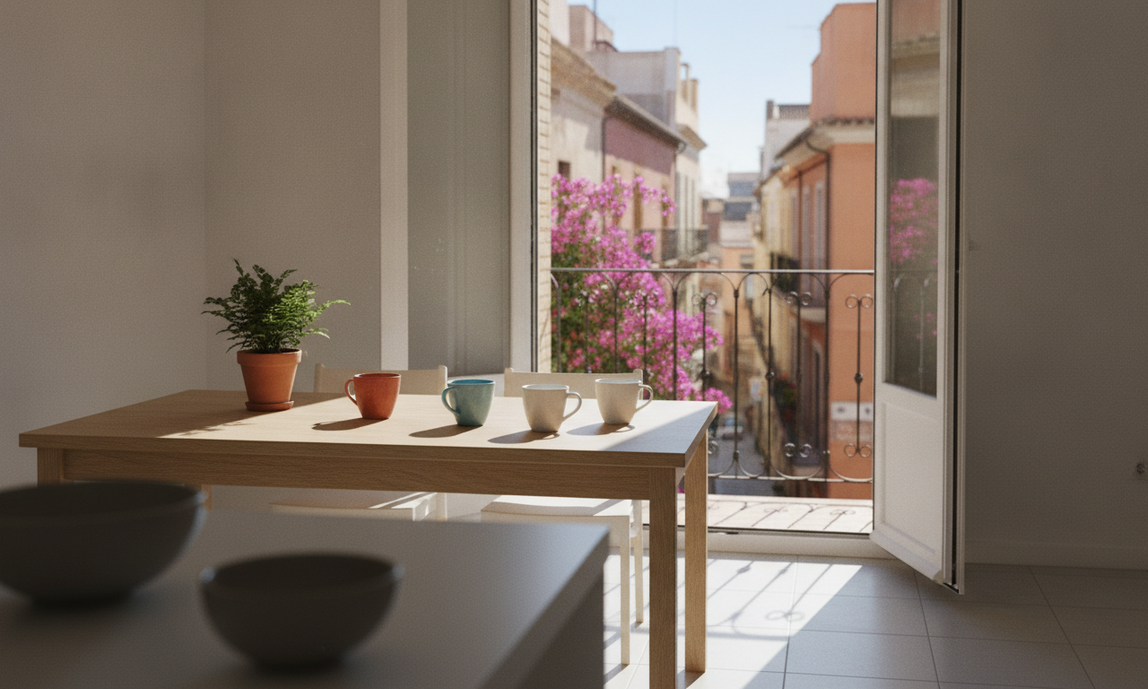
Finding affordable housing in Spain has become a real struggle for young professionals and students. Faced with rising real estate costs and the scarcity of accessible listings, the Spanish government has decided to take action. In April 2026, the approval of the new 2026-2030 State Housing Plan marked a decisive turning point with the long-awaited extension and increase of the Bono Alquiler Joven (Youth Rental Voucher). At Roomlala, we closely monitor changes in the rental market, and it is clear that this government subsidy is reshaping the long-term rental landscape in Spain. The most striking impact? A dramatic revival in demand for shared housing and homestay rentals. But how exactly does this new program work? Why does it mechanically push young people toward shared housing? And most importantly, how do you navigate the administrative maze to benefit from it? We break down every detail of the 2026 Bono Alquiler Joven and its direct impact on the Spanish shared housing market for you.
What is the 2026 Bono Alquiler Joven and what is new?
The Bono Alquiler Joven is not new, but its 2026 version, integrated into the 2026-2030 State Housing Plan, introduces substantial changes that change the game for thousands of young people. Approved in April 2026, this new plan aims to facilitate the emancipation of young adults in Spain, a country where the average age of leaving the family home remains historically one of the highest in Europe.
Read also: Porta 65 Jovem 2026: The Guide to Financing Your Shared Housing in Portugal, Youth Rental Voucher fall 2026: How to fund your shared housing in Spain and Porta 65 Jovem 2026: The complete guide to financing your shared housing in Portugal
The first major innovation lies in the increase of the allocated amounts. The subsidy now amounts to up to 300 euros per month for renting an entire apartment. However, the most relevant measure for our Roomlala community is the specific allowance of 200 euros per month intended exclusively for renting a room in shared housing. This clear distinction shows a government willingness to adapt to the new realities of shared living and student financial insecurity.
Furthermore, the duration of this subsidy has been significantly extended. While previous versions of the program were limited to two years, the 2026 Bono can now be received for a maximum period of 4 years. This extension offers a real breath of fresh air and long-term financial stability for young people aged 18 to 35, allowing them to plan their university studies or the start of their careers with much more peace of mind.
Finally, income requirements have been clarified to target those who need it most. To be eligible, the applicant's annual income must be less than 3 times the IPREM (Public Multiple Effects Income Indicator). In 2026, this represents an income ceiling set at a maximum of 25,200 euros per year. This threshold is designed to cover a vast majority of scholarship students, recent graduates in their first jobs, and young professionals looking to settle in the country's major economic hubs.
Eligibility requirements for shared housing: caps and market realities
Strictly observed rent caps
To benefit from the 200 euros per month of the Bono Alquiler Joven in a shared housing arrangement, meeting the age and income criteria is not enough. The Ministry of Housing and Urban Agenda (MIVAU) has also imposed strict caps on the rent amount. Generally, the rent for the room being leased must not exceed 300 euros per month, excluding utilities.
However, aware of the skyrocketing prices in certain highly attractive regions, lawmakers have included an important exception. This cap can be raised to 450 euros per month in so-called stressed areas (zonas tensionadas), subject to specific agreements concluded between the State and the various Autonomous Communities. This flexibility is crucial to adapting the law to the Spanish real estate geography.
Let’s take a concrete example to understand: Lucas, 24, finds a room on Roomlala in Valencia for 280 euros per month. He is perfectly on track to receive the standard aid. In contrast, Sofia, 26, is looking for a room in Madrid. If she finds a room for 400 euros, she will only be able to receive the aid if the Community of Madrid has officially activated the derogation for stressed areas, thereby raising the legal cap to 450 euros for her municipality.
The worrying gap with the reality of large cities
It is precisely on the issue of caps that the shoe pinches, and our analysis at Roomlala confirms the sector's concerns. Despite the possible exceptions, a glaring gap remains between the limits required by law and the brutal reality of the Spanish real estate market in 2026. Recent data published by experts such as Idealista News are clear and invite caution.
In major Spanish metropolitan areas such as Madrid, Barcelona, or Palma de Mallorca, the Bono rent caps simply exclude more than 60% of the offers available on the market. Finding an entire apartment for less than 600 euros (the cap for a full unit in certain areas) is a pipe dream. Even for a simple room, the 300 or 450 euro threshold is very often crossed in central neighborhoods or areas near universities.
This gap has a perverse but predictable effect on the behavior of tenants: it mechanically pushes young people to abandon the idea of renting a studio or an individual apartment to turn massively toward shared housing or homestay rentals. Today, it is their only viable way to find a rent that fits within the government's strict boxes to unlock this valuable 200-euro subsidy.
Why this government aid is making demand for shared housing explode
The impact of this gap between the aid caps and real estate prices is being felt head-on by connection platforms like Roomlala. Since the announcement of the 2026-2030 State Plan, we have been witnessing an unprecedented revival in the demand for long-term shared housing. Young Spaniards, as well as international students, are demonstrating formidable economic pragmatism in the face of this situation.
Since it has become almost impossible to rent an apartment alone while benefiting from the aid, shared housing is the premier solution. With a 200-euro subsidy for a room where the rent is capped at 300 or 450 euros, the actual out-of-pocket expense for the young tenant becomes extremely low, ranging between 100 and 250 euros per month. It is an incomparable financial windfall that allows one to maintain a decent standard of living while pursuing their studies or the start of their career.
On the side of hosts and landlords, adaptation is also very fast. Many hosts who previously rented their entire apartment now decide to change their rental strategy by renting their property room by room. This allows them to meet this massive new demand while ensuring that their tenants, supported by the State for a duration of 4 years, will be solvent in the long term.
Take the enlightening case of Maria, a Roomlala host based in Seville. She was having more and more difficulty renting her large three-bedroom apartment for 900 euros per month to young professionals. By deciding to divide it into three rooms rented for 300 euros each on our platform, she found takers in less than 48 hours. Her three young tenants were able to activate their Bono Alquiler Joven, guaranteeing Maria regular and secure payments. At Roomlala, we strongly encourage this type of intelligent transition that equitably benefits all parties.
Administrative challenges: delays and territorial inequalities
Management fragmented by Autonomous Communities
While the 2026 Bono Alquiler Joven is a commendable national initiative, its practical implementation is delegated to the 17 Autonomous Communities of Spain. This decentralization of fund management, although it theoretically aims to adapt the aid to local realities, actually creates a complex administrative mosaic and deep territorial inequalities among young citizens.
Each region is fully responsible for opening its own online application portal, examining files in detail, and the final disbursement of funds. Consequently, the dates for opening applications vary significantly from one region to another. A student residing in Andalusia could thus see their request processed and validated months before a young professional located in Catalonia or the Basque Country.
This situation requires applicants to be vigilant at all times. At Roomlala, we strongly advise our tenant users to check the official websites of the housing department of their respective Autonomous Community on a weekly basis. It is imperative to prepare your administrative file well in advance to be ready to submit your application on the exact day regional quotas open.
Payment delays and the Youth Council alert
The other major black mark of this government program concerns processing times and effective payment. The Spanish Youth Council (CJE) regularly alerts the media and public authorities about massive payment delays. In some congested regions, young people may wait up to a year after the official approval of their file to receive the first bank transfer, even though it is fortunately retroactive.
These bureaucratic delays put many young people in situations of temporary financial instability, forcing them to dip into their savings or request help from their families to cover rental costs for long months. For hosts, this can also generate legitimate fears regarding the monthly payment capacity of their tenants who are waiting for the subsidy.
This is why, on Roomlala, we make it a point of honor to secure transactions and establish a climate of trust. We recommend that tenants, as far as possible, set aside precautionary savings to cover the first months of rent while waiting for the release of the Bono. To reassure hosts, presenting the Bono eligibility certificate (even while awaiting final payment) is an excellent argument demonstrating your reliability and future solvency.
Our practical advice to maximize your chances of obtaining the Bono for shared housing
Faced with the complexity of the Spanish administrative system, meticulous preparation is absolutely essential. At Roomlala, we want to give you all the keys to succeed in your 2026 Bono Alquiler Joven application on the first try and secure your shared housing under the best possible conditions.
First of all, anticipation is your best ally. Do not start looking for the required documents on the day applications open in your region. The funds allocated by the State to each region are limited and are very often distributed according to the strict rule of first come, first served. An incomplete file or one submitted a few days late will cost you a golden opportunity.
Next, it is crucial to properly formalize your room rental contract. For the aid to be granted by the administration, you must have a nominative rental contract, duly signed by both parties and legally valid. Verbal agreements, hand-to-hand payments, or undeclared sublets will automatically and permanently exclude you from the government program.
Here is a practical checklist to prepare a solid file:
- The written rental contract: Make sure it very clearly mentions the exact rent of the room (which must absolutely not exceed 300 euros or 450 euros depending on your geographic area).
- The Empadronamiento certificate: This document issued by the city hall proves that the rented room is indeed your habitual and permanent residence. It is mandatory.
- Your proof of income: Prepare your latest income tax returns (IRPF) or your pay slips demonstrating that you earn less than 25,200 euros per year, which is less than 3 times the IPREM.
- Proof of payment: Carefully keep the bank receipts of rents already paid. Note: cash payments are systematically refused by administrations for the granting of aid.
Let's take the example of Carlos, a student in Granada. By using the secure Roomlala platform, he was able to sign a proper room rental contract with his host. As soon as he moved in, he immediately registered at the local city hall. When the Junta de Andalucía opened the online application window, his PDF file was already perfectly compiled: contract, ID card (DNI), empadronamiento, and proof of income. He was able to submit his application in the very first hours, thus maximizing his chances of receiving the funds quickly.
Ultimately, the 2026 Bono Alquiler Joven is a fantastic financial opportunity for youth in Spain, despite its obvious structural limitations and frustrating administrative delays. By capping aid at amounts that now mainly correspond to the individual room market, the Spanish government effectively establishes shared housing as the inevitable housing standard for 18-35 year olds. At Roomlala, we will continue to support you with expertise in this transition, connecting trusted hosts with young people every day in search of an affordable springboard toward independence.





There are no comments yet.
Add a comment
You must be logged in to post a comment.